I’ll never forget seeing Fiddler on the Roof for the first time. “If I were a rich man…” and then: “Tradition, tradition!” Well, I’m not a great singer, but one of the most moving moments in that entire play was when Tevye, being confronted with the new way his daughters were finding husbands—actually choosing for themselves! Oh, the horror!—asks his wife of so many years, “Do you love me?” What follows is an amazingly tender moment for a couple who have had precious few tender moments in their very hard life. It was very, very beautiful.
I guess this is the heart’s cry of all of us: “Do you love me?” You can hear the pain and the fear in that question. The question that’s asked: “Am I really worthy of love? Is there anything in me that’s lovable? Do you value me and miss me? Well, do you love me?” There’s something visceral about this longing. There’s something deep here. It’s a confrontational question that goes to the very foundation of my own self. No wonder it draws out strong emotions and strong reactions, and these reactions run the gamut of tears to denial to outright hostility. Wow, there’s something to this question: “Do you love me?”
Look at our gospel lesson today in John 21:14-19:
At that time, Jesus revealed himself to his disciples after he was raised from the dead. When they had finished breakfast, Jesus said to Simon Peter, “Simon, son of John, do you love me more than these?” He said to him, “Yes, Lord, you know that I love you.” He said to him, “Feed my lambs.” A second time he said to him, “Simon, son of John, do you love me?” He said to him, “Yes, Lord, you know that I love you.” He said to him, “Tend my sheep.” He said to him the third time, “Simon, son of John, do you love me?” Peter was grieved because he said to him the third time, “Do you love me?” and he said to him, “Lord, you know everything. You know that I love you.” Jesus said to him, “Feed my sheep. Truly, truly, I say to you: when you were young, you girded yourself and walked where you would, but when you are old you will stretch out your hands and another will gird you and carry you to where you do not wish to go.” This he said to show by what death he was to glorify God. And after this he said to him, “Follow me.”
Three times the Lord confronts Peter with the same question, and the Lord knows even better than Peter what the answer to that question is in Peter’s heart, but he wants Peter to know just as deeply. The first time the answer comes quickly to Peter’s lips: “Yes, Lord, you know that I love you.” Of course, the question is more nuanced than above. It is: “Simon, son of John, do you love me more than these?” What do you think the Lord is referring to when he says, “More than these?” Well, he means more than Peter’s friends, more than Peter’s profession of fishing, and more than Peter’s family. In other words, more than anything or anyone else. And Peter answers quickly and the Lord responds to Peter’s promise just as quickly: “Feed my lambs.”
But the Lord asks two more times. Interestingly, Peter had denied knowing the Lord three times, and now he is being asked three times, “Do you love me?” It matters. And Peter’s answer is increasingly filled with pain and hurt that the Lord is asking three times. To the last time, Peter replies, “Lord, you know everything. You know that I love you.” Finally, the depth of denial is found, and the equal depth of repentance is embraced, but the calling of St. Peter is sealed. He is to tend the Lord’s flock until that fateful day: “When you are old, you will stretch out your hand and another will gird you and carry you to where you do not wish to go.”
Each of us confronts our desire to be loved, but our love for God is of a completely different nature. For, you see, God isn’t like us in that he doesn’t need to be loved or valued. He is complete within himself. He is Father, Son, and Holy Spirit, and he is affirmed and loved in an eternal communion of love in the three Persons. So his call for us to love him above all things and persons isn’t for his benefit; it’s exclusively and completely for our benefit. God’s call to love him first is the most selfless invitation ever given to humanity because all the benefits of this loving relationship are all on one side—ours.
Today, do you love God? Now, your answer to this question is always obvious, because the answer is seen in your priorities, your actions, your values, and your choices. Those who love him care for others, serve him by serving others, and prioritize their love based on their love for him. Your answer to that question is in every choice you make, in every priority you set, in how you even spend your time and your resources. You answer this question every day. How are you doing? If you want to do more than just pay lip service to this all-important question that I invite you to struggle with me, and let’s learn how to be Orthodox on purpose.
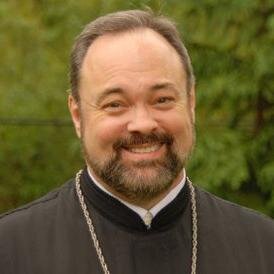 Fr. Barnabas Powell