
Announcer: Welcome to Family Matters: Fully Human Edition.
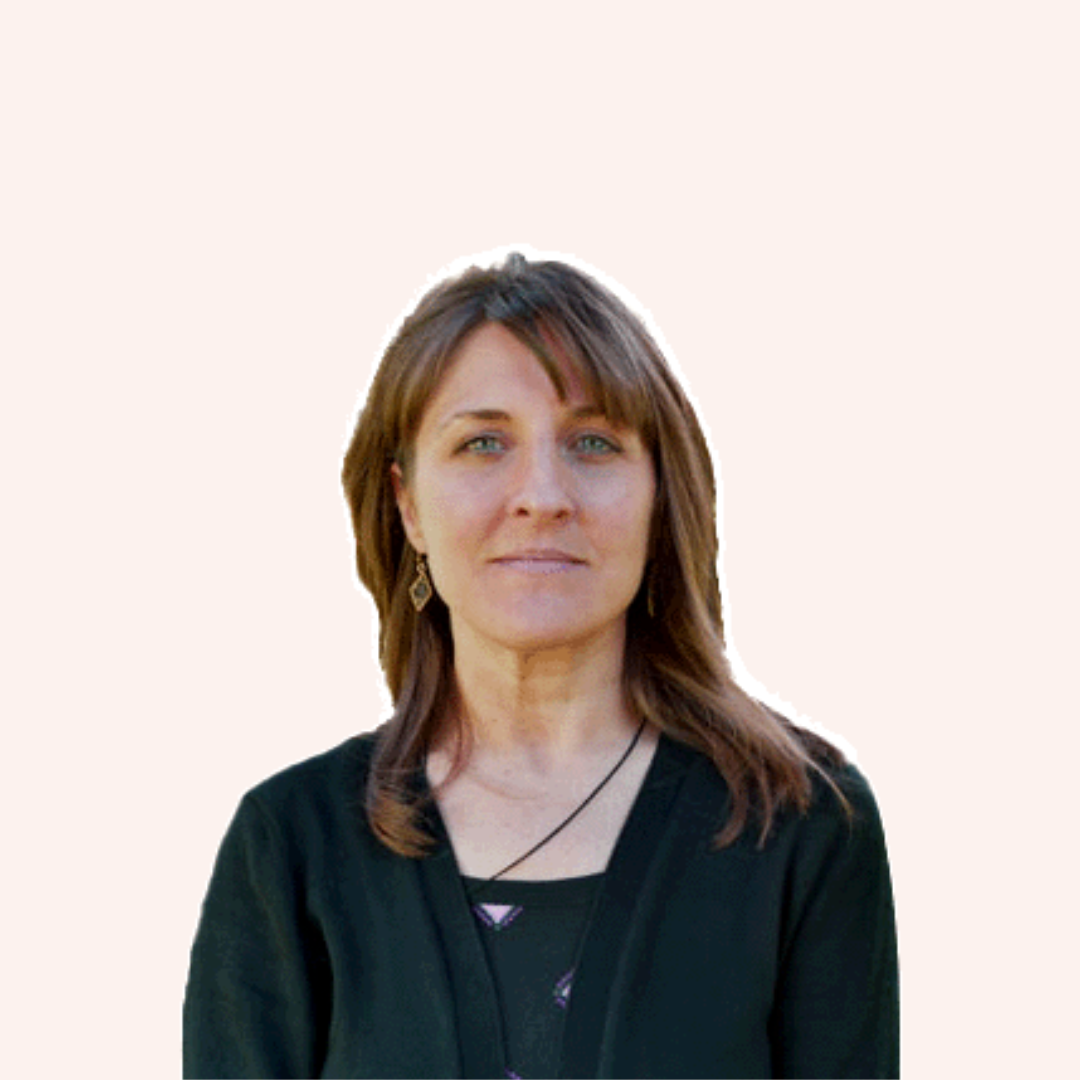
Once per month, Presvytera Melanie DiStefano will host the GOA Center for Family Care Family Matters podcast,
featuring interviews of Orthodox Christians with disabilities, as well as parents, caregivers, and parishioners who foster education and inclusion within church communities.
The intent of these conversations is to encourage and inspire others who have disabilities—and their families—while serving to shed light on the unique gifts and value every person has as a member of the Body of Christ.
Presvytera Melanie DiStefano: Welcome to Family Matters: Fully Human Edition.
This is Presvytera Melanie DiStefano, and I have a very special guest today, Bishop John (Abdalah).
Bishop John is an assistant professor of pastoral theology at St. Vladimir's Seminary.
He holds a doctor of ministry and pastoral care from Pittsburgh Theological School and a master of divinity from St. Vladimir's.
He has a master's equivalency in pastoral counseling from Pittsburgh Pastoral Institute and a bachelor of science in business administration from Suffolk University in Boston, Massachusetts.
Bishop John is a clinical member of the American Association of Pastoral Counselors. He taught pastoral counseling in the graduate program at the St. John of Damascus Institute at the Balamand in Lebanon.
He served as a priest for 33 years of the Antiochian Archdiocese of North America, was dean of St. George Cathedral in Pittsburgh for many years, where I met him, and also served in New Kensington for 16 years.
Bishop John has edited the Word magazine, has been spiritual advisor for Antiochian women since 1997. He served as dean of the Western Pennsylvania clergy and churches for 21 years.
Bishop John taught priestly formation for the Antiochian House of Studies while mentoring full-time seminarians in the Antiochian House of Studies programs.
Married to Joanne Josephs until her repose on May 25, 2008, Bishop John is the father of three children and the grandfather of four.
In 2011, he was consecrated as auxiliary bishop of the Antiochian Orthodox Christian Archdiocese of North America.
Thank you for being with us.
His Grace Bishop John (Abdalah) of Worcester and New England: Oh, I'm very pleased.
Presv. Melanie: Okay, let's dive in!
This podcast is meant to be aired around the time of Father's Day, so we're going to talk about fatherhood a lot in our conversation,
knowing that His Grace has the experience of being a biological father, grandfather, and also a spiritual father, as one serving as a parish priest and also now as a hierarch.
So the first question I'd like to ask is: How do you view Christian virtues in fatherhood? What are some key Christian virtues that fathers should aspire to in their family relationships?
His Grace Bishop John: You know, our children—spiritual children and biological children and adopted children—call us "father," and Christ calls God "Father," and by our baptisms, God is also our Father, because we're entering into this very intimate relationship.
The Aramaic is abba, which means daddy. It's a much more intimate relationship than we get from the English word "father."
And this intimate relationship is a relationship of a kind of unity, a kind of oneness: the oneness that the Holy Trinity enjoys as the Father pours himself into the Son and into the Spirit, and the Spirit into the Father and the Son, and the Son into the Spirit and the Father.
And so when we express love for each other, we pour ourselves into each other. And as we pour out, we make room to receive from the other. They're pouring forth themselves into us.
So our relationships are really modeled after the experience and life of the Holy Trinity itself, which is what it really means to be in the image and likeness of God.
God is love. He's three persons. He pours forth himself, and he receives from the other to himself.
So, like God the Father is not jealous of his Son, is not jealous of his Spirit, we fathers should not be jealous of our spouses and of our children,
and it's our natural instinct to build them up, to show them love, and to send them forth—
not so much as extensions of ourselves, but as reflections of this creating command that God gives us:
to take care of the world, and to reveal him to the world, and to bring all of that in the world that is in disorder to order.
Children need gentle direction. They need knowledge. They need experience.
When Christ emptied himself to take on flesh and to become human, he humbled himself and embraced all of our humanity so that when he ascends, he can ascend with us, he can bring us into his resurrection, into his life.
We cannot reduce the image of fatherhood to virtues, but to a oneness of God himself.
It's not about being kind and being gentle and being loving and being compassionate and being protective.
God is, of course, all of those things, and we want to be all of those things, but those are more of what comes along with being initiated into the body of Christ, sharing his life, sharing his oneness.
So fatherhood is about pouring into another so that that other can stand on his own two feet, and then mentor others.
Fathers, at the same time, need to have three kinds of relationships. They need to have mentors, and be somehow somebody else's protégé.
They need to have friends that are peers, that can keep them balanced when this parenting stuff gets complicated.
Our three-year-olds defy us, and they're not defying us to defy us; they're defying us to differentiate, to figure out where you begin, and where they begin, and where you end, and where they end.
So first, we're united, and then we see that we're separate persons. And so what looks like defiance from our children is almost always an attempt to differentiate, you know?
You ask a two-year-old, "Do you want me to pick you up?" No. "Do you want to stay sitting down?" No. "Do you want peanut butter?" No. "Do you—?" You know, everything is no, because they're trying to see who they are as separate from us.
So the virtues accompany this experience of unity and differentiation, of— the Father is not the Son, and the Son is not the Spirit. They're separate Persons, but they are all God, and they share the same being, the same essence, but they're separate Persons.
You and I are both human, but we're not the same person. Everything that makes me human, you have and makes you human.
And both men and women share that image and likeness and gained their identity from Christ, who created us male and female: different, but of equal substance, of the same substance, of what is human.
And so fathers are separate from their children. They're not our children. God gives us them for a while as a gift, but they're meant to go forth. Our children are children of God.
We're children of God, but my kids are not God's grandchildren; they're God's children. My grandchildren are not God's great-grandchildren. They're God's children.
So we're all about growing up and being whole and sharing this life that God gives us.
And this life is dynamic. It's not one-size-fits-all, it's not stagnant, it's not "once you arrive, you're there." It's a relationship like father—
Even when my father died— We had been very close because—
He wholesaled eggs, and it was his job in his company, three days a week, to go to the farms and buy all the eggs that the farms produced. And then we had three delivery trucks that delivered to bakeries and stores and restaurants and noodle factories and all kinds of fun places.
And growing up, if I wanted to see my dad— During the school year, [he] got up, went to work before I got up in the morning and came home after I went to bed.
When I got a chance to be with him, my mother was very pleased to send me off, and I would ride in the truck with him, and we were together sometimes for 12 hours or more at a stretch.
And so when I became a priest and moved away, I missed him, but when he died, I stopped missing him, because now he was with me, and I just take him with me wherever I go.
And it's the same experience I have with my wife. I even have false memories of being places with my wife that didn't exist while she was alive, you know.
Presv. Melanie: [Laughter] That's so interesting!
His Grace Bishop John: But it's because I take her with me wherever I go.
So the virtues are good. The definition that St. Paul offers us about love is good, because love is kind, and it's gentle, and it's long-suffering, and those are helpful, but the relationship with God is deeper.
The relationship with God is one of unity. It's one of knowing. And knowing is not intellectual.
The thoughts that we know—the truth that we know, the relationship we have with God—moves from our head to our heart—
and our heart is imaged by the Fathers as our whole trunk, because that's where we process feelings, and that's where we experience God, not intellectually in our head.
And that's why we need the icons and the music, because we use all of the senses to see how we're one with God.
I talked so much I forgot your question.
Presv. Melanie: It was beautiful. I'm grateful that you did. A couple of things stood out.
It's not so much about focusing on acquiring or aspiring to virtues; it's aspiring to a relationship with Christ and those things come as a result, because when we are one with him or with the Holy Trinity, then we— he pours his love into us,
and we in turn grow from that love, and we can then offer that love to our loved ones, to the people in our families: our children and our spouses.
His Grace Bishop John: And even witness to a fallen world that doesn't happen.
Presv. Melanie: Exactly. To everyone we encounter.
I love the image you express when you said it's a pouring-out: as God the Father poured out and offered his Son to us, we pour out as a parent, and then in turn make room to receive the love as well. So that's such a beautiful image.
A lot of times in our culture we— a tendency, and I don't want to, you know, bash a culture or anything—I love our culture, too, but there's some tendency toward individualization and just "what's good for me, what makes me feel good,"
and then we forget that it's in giving and pouring out that we become most alive, that we can receive—we make room to receive, too. So I love that.
His Grace Bishop John: This image of individualization is one that deserves study, because, yes, we differentiate from God and from each other because we're separate persons, but there is so much that we have in common with each other and that we share,
and especially in a family where we share the same challenges and experiences and are supposed to be a team, you know.
It always strikes me as kind of a little bit funny when husbands and wives compete, and then when they are fighting, I enjoy pointing out that they're fighting about things that they agree on, you know? [Laughter]
But what they're fighting about is who gets to say it last or who— You know, it's like: "The way you say it is not good enough for me; I need to say it myself."
And maybe you do. Maybe it's just the way that you process, that you need to articulate something out loud to make it real to you.
But the virtues and the traits that we look for, that we see in God, because we're created in his image and likeness, we're only who we are when we reflect them, those traits.
And so when we're not acting godly, we're acting against our nature, which is created in the image and likeness of God.
Yes, it gets distorted in a fallen world, yes, the world challenges us, yes, it tempts us, yes—all of those yeses—but, no, it doesn't make us different from who we are.
One of the priests that I serve had a cat who thought that he was a dog, and when people came to the door, the cat went to the door and barked and was indignant that people didn't run away.
And people looked at this cat, and they would just kind of brush them away with their foot, and that so frustrated the cat that the cat bit them, you know.
There was nothing about this cat that you would expect from a cat, you see. And so I can just imagine the dissonance that this poor cat experienced.
I told the story of the cat at the seminary chapel last semester, and one of the students had a scar from the cat that I was talking about, you know, and so came to me after the sermon and named the cat, you know. Yes, that was the cat!
So we're not going to be happy if when we—really happy—when we act against our nature, and our nature is to be in the image and likeness of God. That's what we're created to be.
So just like a cat who thinks it's a dog, the world doesn't respond well. That creates a dysfunctional relationship.
Presv. Melanie: I have a lot of questions related to that, but I guess a couple things that in your talking stand out.
So a lot of times we as parents— you mentioned not to send a child out into the world as extensions of ourselves but as their own unique person, and I think that's a trap we sometimes fall into as parents just— or if we don't know how to differentiate, we don't know where our child ends and begins.
Sometimes we feel so much connected, or even their behaviors are a reflection on us, and then we have these tendencies to wrap a lot of emotions into that, and that often happens with children who have disabilities.
So we might have behaviors that are atypical in social settings, and parents can sometimes—not always; not all parents go through this—but sometimes parents are so connected to their child's behaviors that they feel the scolding, they feel the scorn on behalf of their child when things are atypical.
I wonder how you would advise us parents—you know, fathers and mothers alike.
His Grace Bishop John: Yeah, we all have attitudes, right? and prejudices. And the prejudices are generally having to do with things that we're afraid of that we might not really understand.
My attitude towards children with disabilities is they offer us opportunities to stretch and to grow. They offer us opportunities to develop parts of ourselves that are really God-like, and that can bring us closer and more fully to God. And that they have a gift, and that gift is from God to us.
And that's a really difficult thing to hear, that perhaps God allows people to struggle in a fallen world so that everybody can be saved and so that everybody can grow and so that everybody can give.
Just as St. Basil's saying, that the person in need does more for the rich man who shows him charity than the rich man does for the poor person, a child with a particular struggle, needing help, gives people an opportunity to help, to support and to give.
And sometimes we give when it hurts. And when it hurts, that experience of hurt may seem unpleasant, but it challenges us; it forces us to grow and to be something and have something different.
So what if, instead of being upset that we have this challenge, we could say, "Well, God has given me an opportunity to serve, and God has given my child an opportunity to challenge other people to grow up and get past their fears and their annoyances"?
What does it mean when our children annoy us or somebody else's child annoys us? It means we're so wrapped up in ourselves that we can't see past ourselves.
And that's a wake-up call, that, hey, there's something wrong with me that I can't handle a three-year-old, you know, or a five-year-old.
Sometimes I ask parents who ask me to help them to stand up and to show me how big their child is on their body, and to pull their hand down there and say, "Now tell me, as you look down at your hand, how that little child can be so intimidating to you. You know, you're so much bigger than this child.
How can this child be so annoying to you that you need to protect yourself by controlling them?"
And they tell me, "Oh, but, Father, you just don't understand what that tone does to me, you know, what the tone of their voice, how frightening my child is."
And when they say that, they begin to laugh at themselves, you know, that, really I'm intimidated by a ten-year-old, and I get so frustrated that I throw a tantrum, and then I'm worried that God can't handle my tantrums?
If I can handle the tantrum of my three-year-old, can God handle my tantrums, my fears, my acting out, and still love me and still care for me and still be that charitable, human-loving parent that he is?
Presv. Melanie: And once again, it's about knowing God.
His Grace Bishop John: Sure. And knowing, in our faith, again, is not intellectual.
Fr. Hopko used to say that anytime anybody knew someone in the Old Testament, there was a baby in nine months. [Laughter]
This term, knowing, implies a unity, a oneness.
So knowing isn't intellectual. It's about putting flesh on something and showing it for what it really is and letting that come forth.
Presv. Melanie: And intimacy.
His Grace Bishop John: Yes, indeed.
Presv. Melanie: Kind of related to what we were talking about with parenting, sometimes in families, there are a lot of varying statistics out there, so I'm not going to even begin to put numbers to this, but we know that families raising children with disabilities can face atypical challenges, and it sometimes affects the spousal relationship.
So in your pastoral experience, what do you think is at the heart of some of the relationship challenges you've encountered with when families have atypical child-rearing experiences?
His Grace Bishop John: When a family deals with a crisis, a husband and wife deal with a crisis, the crisis response is like a rollercoaster ride, and sometimes the rollercoaster is ascending and sometimes it's free-falling.
And when a husband and wife share a common crisis, they are united, but they're different persons, and they respond at different rates and at different times and a little bit in different ways.
And so while the husband's rollercoaster may be climbing, the wife's rollercoaster may be free-falling.
And because we're next to each other, we feel like we're not experiencing the same thing and we're not connected, and that adds a whole other level of stress from expectations of how we should be—how we should be: all those should-bes—responding and how we should be dealing and what we should be experiencing. And we all know that should-bes are nonsense.
So if we can somehow talk to each other about what we're feeling without the expectation of the spouse fixing us—we don't want to be fixed by our spouse; we just want to be heard and understood and connected—if we can have that kind of communication, I think that we can be much more supportive.
What generally happens is somebody perceives that the other one is angry, and then the other gets angry that the first one is angry. And then we're angry that you're angry, that you think that I'm angry—and we just— we miss each other, and that can become a perpetual state.
When we have a child who deals with a disability, it's not a one-time acute crisis; it's a chronic crisis, you see? And so we need to recognize that we have real limitations, that there are real needs, and be as creative as we can to enlist others to help us with the real needs.
And that takes some humility and asking each other, but as a church community we can overcome, because we can give people in the Church opportunities—to babysit, to shop, to do favors—that will not make us in debt to them but allow them to offer themselves to God.
You see, this is an attitude change, and it's so different from a regular American idea that "I have to be able to do everything for myself," all right, which is always nonsense.
If we don't need each other then we don't—ultimately we don't need God, and if we don't need God then we're not saved, you see. So we have to get over our American ideal of being totally self-sufficient and such.
It has something to do I think with what's called the Protestant work ethic which— the early settlers in America were Protestants who thought that if they worked hard and made a lot of money, then that meant that God loved them and they would have heaven,
and so they worked real hard to see if they were going to heaven, and that built the world's greatest economy—or at least arguably today still the greatest economy.
That's now i guess finally in question. When I studied business in the '70s that wasn't in question. America was the biggest economy.
But it comes from this theological idea that was never Orthodox.
Presv. Melanie: It's so important for us to not just go through the motions and just accept that these common cultural quests are theologically healthy, which is, you know,
we kind of get raised to do the best we can with the talents we've been given, make the most out of them with a career choice, and, you know, the workforce expects you to produce this, and success is measured a certain way, and where our relationships and all of that—and what do we sacrifice in that pursuit?
And so that balance can be tricky if we don't ask ourselves the questions about— What is really God asking of me in this life? What is my purpose here? So, yeah, it's important.
Now related to the parents, so like the issue with parenting and spousal importance of fatherhood, how does the spousal relationship being healthy or needing help affect the child rearing?
His Grace Bishop John: Some people think that we teach our children how to love by loving them, and the research doesn't bear that out. The research says that we teach children how to love by loving our spouses, that children learn by observation. As the Broadway song goes, "They— The children are watching."
And they're watching everything and they're learning everything. They're learning from us what they should do when they grow up and are in charge and what they don't want to do,
and we have to be deliberate about choosing from our own upbringing what we replicate and what we choose not to replicate, and God gives us the opportunity to discern and make choices and gives us free will to choose.
And so we can choose to respond in healthy ways, even if our parents didn't.
And again, the Church can help with this because the Church community can offer some of the balance and the truth and the parenting wisdom that perhaps a particular family missed, because father's distant because his father was distant, and he was distant because his father was distant.
But this curse of dysfunction for seven generations is broken by Christ, who showed us a whole new way and made us the people of a different way—
a way of thinking, a way of responding to each other, a way of loving, a way of sharing, a way of caring for each other that is different from the world, from the fallen world, that's afraid that there's not going to be enough or someone's going to get ahead or something.
So if God knows the hairs on our heads, if he takes care of the lilies of the field, that's a way of thinking, that all is required of me is that I work with God, and God and his community have the resources that I need and I don't need to be fearful.
That's a different way of thinking. Christianity is a radically different way of thinking, a thinking where— that was different from the world at the time, because the world at the time, women and children had very little value. And for Christ, women and children had incredible value.
And so we need to reveal this to our children, that they're valuable and we value each other because God gives us value and because God values us.
Ultimately, you know, before they— we start losing control of our children and I think we start losing control when they start walking—before we start losing control and being afraid,
we think that babies have such great value, and, you know, they don't even smile, but we think that they smile because they are— and then they learn to imitate us and control us and and mirror us and all this other kind of stuff.
But the truth is they really only give us sleepless nights and dirty diapers—and we think they're magnificent. [Laughter]
So to keep that understanding of "children are a gift to us" in our Orthodox faith—and this is uniquely Orthodox—we are given to God in baptism, and so we don't own ourselves.
Our parents gave us physical life, and they want to give us spiritual life, so they give us to God in baptism.
And then in marriage, God gives a man to a woman and a woman to a man for them to work out their salvation, for them to be a team.
We have the same procession—in baptism, in weddings, and in ordination—around the Gospel book, because this is a way of life—again, a way—a way of life that brings salvation. And so our Christianity is a way of life.
So to receive even our impairments, even our struggles, as gifts that God knows that we need for salvation? This is a radical idea. That's world-changing, this attitude change.
Presv. Melanie: Yeah. If I tell myself that every struggle I encounter is because I've done something wrong, then I can really create a lot of internal— because it's not true.
His Grace Bishop John: Right.
Presv. Melanie: I mean, so we create this whole other scenario that we're living off of if we're not basing life…
His Grace Bishop John: Sure, and that leads to self-hatred, self-loathing.
Presv. Melanie: Right. Self-hatred, self-loathing. Yeah.
His Grace Bishop John: And the truth is, is when we suffer, we learn to be more compassionate to others that are suffering, and we become greater Christians and greater human beings. And this is an amazing gift.
Presv. Melanie: Yeah. You talked a little bit about the Church, as you know, how the Church can help in raising families, counsel priests, pastors of communities, to best minister to families with disabilities.
His Grace Bishop John: Not to assume things, to ask people what they need and what they want, and to try to be flexible and to use the participation and gifts of people who are challenged with particular things, opportunities for the whole community to give and to grow and to be more Christ-like.
I think that's what what pastors can do.
I think that when a family is challenged with something, the larger the community that can help share the burden, the less burden on each individual.
When I visit my grandchildren and feed the baby, that gives Mom chance to take a shower.
Presv. Melanie: Thank you. I like what you said, too: Don't assume; ask what the specific needs are, because every family probably has unique perspectives and needs, and the input is so important from the people who are experiencing it. Thank you for that.
His Grace Bishop John: Yeah. I think we need to ask questions like: What is fair? and What is reasonable?
And parents who are shy about asking for help, for me the rule of thumb is: Would I be upset if someone asked me to do this? And if I would be willing to do something for someone else, then it's okay for them to do that for me.
Presv. Melanie: Can you give an example?
His Grace Bishop John: I don't want to feel needy and accept help carrying all of the heavy things that bishops have to carry around, and so it embarrasses me when—
Well, it doesn't happen so much now that I'm in my 70s, but when I was newly a bishop it bothered me when a priest 15 years older than me would carry my heavy bag, like I couldn't do it, you know.
No, I'm a strong human being; I want to carry my own bag! But if someone gets joy from it and they can handle it, it's okay. I can still help. I can still— but I can also accept help, and I can also give help, you know.
If I get to church early and people are carrying boxes into the church for the reception that they're going to have because the bishop is coming to town, I can carry pop from the trunk to the kitchen, and so it's okay.
So it's okay for us to allow people to help us, and the gift that we give them is now they can feel good that they did something for God.
Presv. Melanie: For God—I like that.
His Grace Bishop John: Yes. Yeah, when people get resentful I tell them: Look, instead of thinking you did something good for that person, you you do it for God, and God will reward you when you take care of those who need the most that he loves.
Presv. Melanie: Final question. Because the name of the ministry is "Fully Human," we ask everyone who comes on this program this question: What does it mean to be fully human?
His Grace Bishop John: The image of humanity and the image of divinity is Jesus Christ, and so the more we can look like Jesus Christ, the more we can serve like Jesus Christ, the more we can let Jesus Christ serve and use our bodies, our minds, our talents, our experiences—the more human we are.
Human is made in the image and likeness of God, and God quickens it, and God creates it, and God gives it as a gift.
As our gift, even our bodies are a gift that God gives us to be able to experience him.
Announcer: Thanks for listening to Family Matters. To learn more about the Center for Family Care, please visit family.goarch.org. That's family.goarch.org.
This has been a listener-supported presentation of Ancient Faith Radio.
 Pres. Kerry Pappas
 Pres. Melanie DiStefano