Fr. Alex Goussetis: Welcome to Family Matters. My name is Fr. Alex Goussetis, and today I welcome both Fr. Nicholas Anton and Presvytera Melanie DiStefano. Our topic is titled “Developing Liturgical Resources for the Deaf and Blind.” Let me introduce the speakers.
Fr. Nicholas serves as the director of operations to the Assembly of Canonical Orthodox Bishops of the USA. Previously the ecumenical officer and United Nations representations for the Greek Orthodox Archdiocese of America, he specializes in negotiation, diplomacy, peacemaking, and change leadership. He was ordained to the holy priesthood in July of 2023.
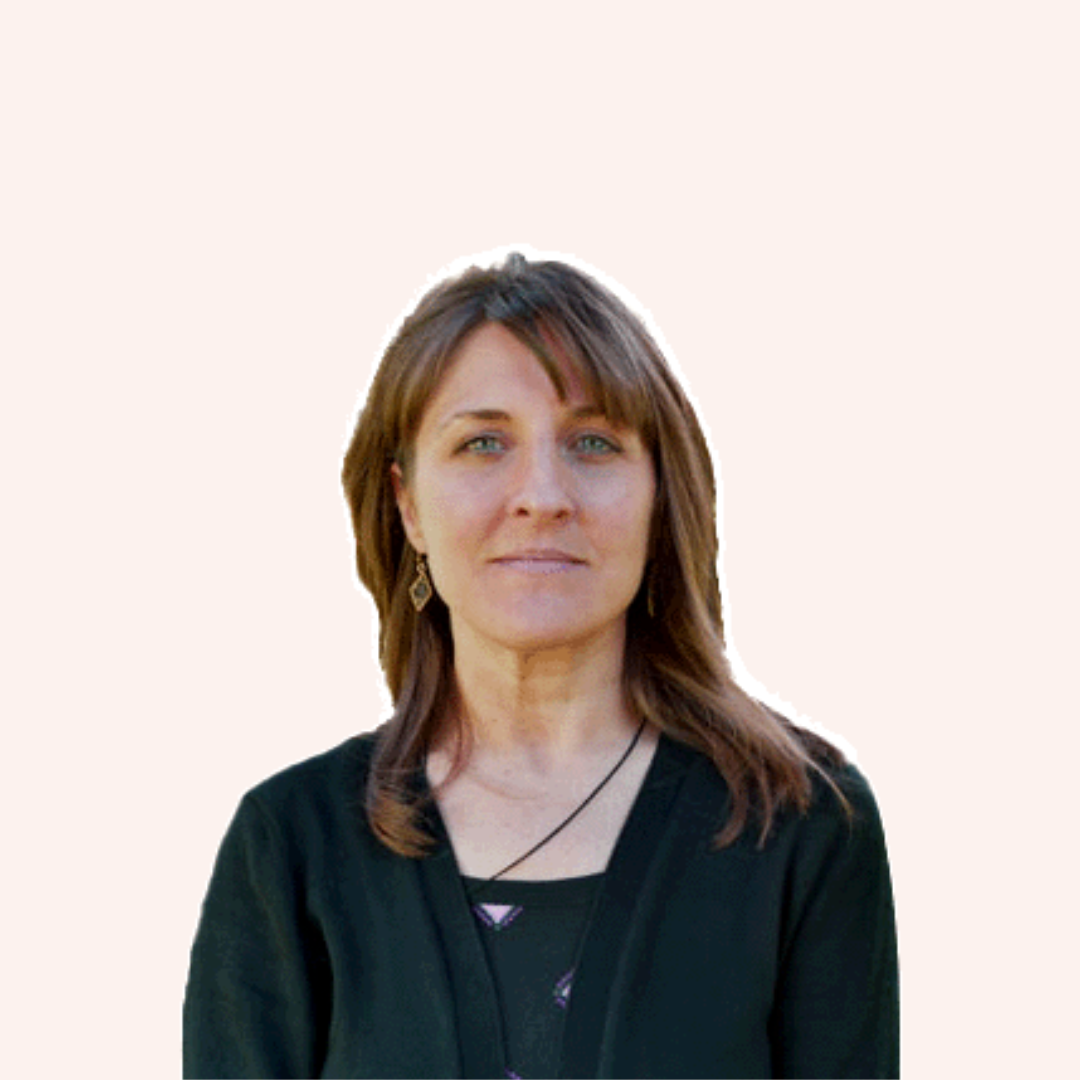
Presvytera Melanie DiStefano is the resource developer and manager of the Fully Human Ministry for Families with Disabilities at the Center for Family Care. She attended Holy Cross School of Theology, where she received a master’s of divinity degree and met her husband, Fr. Joseph DiStefano. Together with their son, Michael, who has special needs, they serve St. Nicholas Greek Orthodox Church in Youngstown, Ohio.
Welcome to you both!
Presvytera Melanie DiStefano: Thanks, Father.
Fr. Nicholas Anton: Thank you, Father.
Fr. Alex: As listeners of the Family Matters podcast, you know that the Center for Family Care produces resources that strengthen marriages and families in the faith. We do so through digital resources and in-person retreats. Over the past few years, Presv. Melanie has led development and expansion of the special-needs ministry of our department. The response has been remarkable. Families with special needs are thirsty for more resources to help them live out the faith. A partnership between the Orthodox Christian Assembly of Bishops and the Center for Family Care is helping expand ministry to special needs families.
The topic today is the project for developing liturgical resources for the deaf and blind. Perhaps we can begin if you both can help briefly explain some of the background of how and why this particular project got off the [ground].
Presv. Melanie: Should I begin, Father?
Fr. Alex: Sure!
Presv. Melanie: So the idea kind of started with interviews. You mentioned some of the Fully Human resources. One includes a podcast that I do monthly, and there were two interviews in particular, with Justin Heard and Irene Tunanidas which enlightened me about some of the liturgical resources that were very lacking in our tradition, in our Church.
So Justin came into the Church recently as a young adult and studied theology at Holy Cross. He was sharing with me in that interview his frustration that people who are blind cannot easily follow Church services. He as a music background, and he really desired to learn chant, but didn’t have access to the texts. Braille books would be too large. But what he shared was there is current technology that allows blind people to follow along with a text using a hand-held device that would scroll whatever is being read or sung in Braille on this hand-held device. The problem that we have in our Church right now is that most liturgical texts are not in formats that are readible by these high-tech innovations.
And then Irene Tunanidas, who is a lifelong Orthodox Christian and was Deaf since early childhood, shared a lot about her struggles in her early life, cultural stigmas, misunderstandings in our Church community, and she was emphasizing over and over the need for children to connect with Liturgy and in their community. She became an advocate for the Deaf, and throughout the interview she just kept bringing up: “I really don’t want children to experience what I did. I want them to feel connected in church.” Fortunately her parents were very faithful, and they instilled the faith in her, but not everyone can weather the storms, right?
So I began to think about what our department could do with the resources we do have that might be able to help that, and wanted to make some videos in ASL (American Sign Language) so that we could disseminate them for families, for churches, to use so that at least we could start getting hymns out there. The translator for that interview with Irene introduced me to the OCDA (Orthodox Christian Deaf Association). The reason she did that is because when I started talking about videos, she said, “Wait, wait, wait, you’ve got to talk to these members.”
What I found out from them is that one of the struggles the Deaf and hard-of-hearing community has is that there’s not an official translation in American Sign Language for the Divine Liturgy. So rarely—rarely—communities will hire someone to be a translator, maybe on Pascha. It’s not often that someone knows sign language and can translate services for others, and even if they do, a lot of times they’re not from our tradition; they’re just hired from a service. In any case, there is a need for having an official translation. So there are words in our service that there’s no word for in sign language. For instance, “Theotokos” often gets translated to mean “godmother” instead of “mother of God.” Or “divine economy”: these are things that are hard to translate.
So the OCDA said before we can make any videos, we’ve got to meet in person; sign language is organic. We have to flush these things out with theologians and figure out how to meaningfully convey accurately what these words are with our signs—and then we can think about videos.
So that’s when it became an issue about translation into liturgy. That begs for blessings from our hierarchs, and that’s when we turned to the Assembly of Bishops.
Fr. Alex: Good.
Fr. Nicholas: And I’ll add that once Presv. Melanie and her team came to the Assembly, it was exactly up the Assembly’s alley. The Assembly of Bishops is— The ultimate goal is Orthodox Christian unity, and we do that either by trying to get existing ministries, like youth ministries, to work together, or when there’s something new like this, something that doesn’t exist, ideally we coordinate it under the Assembly right from the beginning. This way no one jurisdiction is doing it on their own. It doesn’t make a lot of sense for any individual jurisdiction to be creating these new types of things on their own when they can be doing it together and everybody can benefit and all Orthodox Christians from every ethnic background can enjoy it. So it’s a very easy thing for the Assembly to take on and to move forward, and it was right within our wheelhouse.
Fr. Alex: So for our listeners, let’s put ourselves in the perspective of a family that has a special need having to do with either deaf or blind situation. What’s the lack of the accessibility? What’s the result of having a lack of accessibility? I can only imagine a sense of isolation would be a starting point, but maybe if you can add a little bit more so that our listeners can have a sense of what our families are dealing with and feel that disconnect with our Church.
Presv. Melanie: Absolutely. I think you hit the nail on the head, that a big part of that is isolation and not feeling valued by your Church family. As I mentioned above, families have— Actually, I don’t know if I mentioned this, but when Irene— When I was interviewing Irene, she did start a newsletter for Deaf Orthodox Christians, and people were conveying to her that they left the Orthodox Church because they didn’t feel included or their family member did not have the resources to help them feel included. These are anecdotal; I don’t have statistics on it, but this was something that she was seeing for years, people were sharing with her.
So I think families leave the Church; they shy away from church attendance and community involvement. Parents and family members have to work really hard, and especially when your children are little, to translate and to help keep them engaged in worship. I mean, it’s hard enough when they’re little, let alone if there’s a communication barrier that you’re learning yourself as a parent. So, like spoken language, sign language is used before a person can read texts. So people who are Deaf would actually communicate in sign language. For those families, that’s— The onus is on the family. Worship could even become stressful, when you know that you have extra responsibilities when you are engaging with your child. For those who are blind alone, they could hear the services but lose the benefit of explanations that are found in our liturgy books: what is the priest doing, what are the congregants doing, what are the processions taking place, offering of gifts. When people are older and blind and they wish to follow along more fully, they have no way of doing so.
I mean, I talked to Justin Heard. He talked about families becoming isolated, lack of communication. He said that we are decades behind many other faith denominations in providing resources and translations for people who are Deaf and blind. He said that for families with Deaf children, without better ways of being able to engage in worship, would you expect your children to grow up with a positive experience of Orthodoxy, that they would remain Orthodox when they went to college, for instance? Another point he brought up is: Do we expect spouses of converts or cradle Orthodox to feel connected in parishes when the liturgy is entirely in a foreign language? In the same way, think about how, in almost every parish across America, the liturgy is in a foreign language for people who are Deaf. And we know that many children leave the Church when they don’t connect with liturgy or understand what’s happening with liturgy. Worship is the cornerstone of who we are as Orthodox Christians; it’s from where we grow our faith. So to connect is crucial.
For the blind, parents of blind children have to tell their children that they can’t read along with their peers, much less be a chanter if they wanted to in the Church. Children become isolated, feel excluded, and many would stay and stick with it, of course, but many would possibly go on to look for churches where they can feel valued as equal members of the body of Christ—and they will find it in other denominations.
Fr. Alex: You know, it’s interesting: I was struck by some of those pretty sad descriptions that you offered, Presvytera. I was thinking of a loss not only for those families but really the parish families. We lose out because we lose out on their lives, who they are as people, whom they bring to the faith. Maybe, Fr. Nicholas, we can add a few words about how parishes can actually be rejuvenated by the inclusion of families with special needs, as it relates to the Deaf and blind.
Fr. Nicholas: Absolutely. I mean, the impact is like— If the community is the body of Christ, it’s like we’re chopping one of our body parts off and sending it away. It diminishes the entire community. The parish itself is a family. We celebrate together, we mourn together, we gossip together, we bicker together, we laugh together, we cry, we get frustrated—it’s not a sanitary place. If it looks too sanitary, too perfect, then we’re not acting as a family. And in this way, putting these things together, putting an official translation of the liturgy together, it brings together the community; it brings a positive twist and a positive spin on everything, and it restores the body to its fullness.
If we think about the family, when we have a brother or sister, son or daughter, mother or father who’s Deaf or blind, what would we do? We wouldn’t say, “Oh, no problem. They don’t need to know what’s going on.” Or we wouldn’t tell them to find another church; we wouldn’t cast them out of the family. In that way, we would embrace them; we would look for their talents, just like we would look for everybody else’s talents. And when we find each other’s talents, in whatever way that is, it doesn’t matter if we’re Deaf or blind or anything else: we’re going to add to the community and add to that value within the community as a whole. We’re doing our self a disservice when we don’t create the atmosphere for everyone to be included, everyone to be welcome, and everyone to be able to give their talents to the community and ultimately to Christ.
Fr. Alex: Presvytera, I know you’ve experienced this first-hand, so what are your thoughts about how the whole parish benefits from inclusion?
Presv. Melanie: Yeah, the Scripture verse that comes to mind is from 1 Corinthians 12, when St. Paul says, “If one member suffers, then all the members suffer with it.” So a parish family I think that has a healthy understanding of our faith would recognize that we are all members of that one body of Christ, like Fr. Nick suggested. We would be grieved when our fellow parishioners, the members of our very body, were not valued. And, yes, I think I’ve seen the gifts that my son offers to his community, in his purity, in his innocence. It’s a different disability; it’s cognitive disability, but his gifts shine a different way. So oftentimes we just have to be open to what value every human being brings into our midst, the beauty of the image of God in each person.
I would also add a quote from St. Gavrilia, the newly canonized St. Gavrilia. She said, “Where there is no respect for the person, there is none for God either.” I feel like sometimes in our churches there’s a reverence for God, a piety which is beautiful, but we forget about the image of God in our neighbor, and we need to be a little more intentional about looking and respecting one another as that image of God.
Fr. Alex: So let’s get into the nuts and bolts. What are the goals of the project? How will these resources be produced and developed? Can we hear from both of you on really what the next steps are here?
Fr. Nicholas: Absolutely. The ultimate goal of the project is to create an official sign language lexicon of Orthodox Christian theological terms, produce formats of texts that can be utilized properly with machines that blind people are able to use. As we know, the text would be too large in Braille, but there’s machines that can produce the Braille. So, getting the formats correct. And produce video translations of the Divine Liturgy and so on and so forth. That’s the ultimate goal. Well, that’s not the ultimate— The ultimate goal is inclusion in our parishes. So ultimately we’re trying to create these resources so that people can be included, but the project itself has these sort of goals along the way.
Presv. Melanie: Right, and in-person workshops. Some of these funds would work toward convening people who are ASL translators, Deaf and hard-of-hearing Orthodox Christians, theologians, so that we could work on these terms that are difficult to translate, come up with this. This is where some of the funding would be going toward—a person to do the video catalogue.
And then to be able to disseminate these videos, where various jurisdictions could use their own hymns. They can set these videos to their own hymns so that it is used as a crossover tool, not just for Deaf people but for hearing population as well. It’s very hard to hire an ASL interpreter if you’re a small parish and you can barely pay your priest. So if our choirs— And young people love to learn sign language. When I was a teenager, all my friends were learning sign language; it was exciting. And when you do it to music… I could just see youth choirs, camping programs, learning these, our hymns, our liturgical hymns, in sign language while they’re singing them. What a beautiful thing that would be to just catch fire in our parishes.
So, yeah, the funds would also help us hire personnel to get these formats and Braille reading devices. This is where the money would be going toward.
Fr. Alex: So production and distribution: these are really some of the key components here of creating the materials, but then making them accessible to the faithful, to our parishes, to parish priests, and so forth. Well, we know any project in the Church requires funding, requires support. So to this point in time, how much money has been raised to date, and how much remains to be raised? What are some of the goals involved with that?
Fr. Nicholas: So far we’ve raised a little over $1800 from somewhere between one and two dozen individuals. So we have a lot of support, a lot of donations coming in. It’s about $1800. We need to raise about $30,000 in order to host a consultants meeting that’s necessary to produce the lexicon, as well as the videos that would come afterwards and the dissemination that Presvytera talked about. So our fundraising goal is $30,000; we’ve raised about $1800 of that.
Folks can support in different ways. One way is just to go on the internet, to AssemblyOfBishops.org/donate. That’s AssemblyOfBishops.org/donate. There’s a form you can fill out for ACH and credit card. You can specify you want it to go to this project; we have a way of earmarking that in that fashion. And below that there is a place where you can write a check, and if you want to earmark it, you can just write “Accessibility Ministry” in the memo line.
Fr. Alex: Any final thoughts? This is a worthwhile project. Maybe there’s some other things for our people to know and be aware of.
Fr. Nicholas: I’d just like to add that the hierarchs— When this came to the Assembly of Bishops—because I work for the hierarchs, but they make the decisions—they didn’t hesitate to approve this project. They see themselves as each hierarch is the father of every parish in their diocese, and really they’re the spiritual father of every parishioner of every parish that’s within their diocese. So when their children came to them saying they feel excluded and marginalized, there was no hesitation. They said, “We need to fix that. Let’s do what we need to do.” So I really think this is very important to the hierarchs; I think this is important to our parishes. Going back to all the reasons we said earlier, really, every single person adds value to the parish in the same way a sibling or aunt or uncle or father or mother, whoever, would add value to the family. I just wanted to emphasize that, that the hierarchs of the Assembly really do want this project; they support it wholly, and that’s why we’re moving forward with some strength.
Fr. Alex: Presvytera, any final thoughts?
Presv. Melanie: With all my heart, I believe this is a worthy project. I’m so excited about it. I pray all the time that people will raise up and support it, because I just feel so strongly that it’s time. It’s time to provide these much-needed resources.
Fr. Alex: We read in the Gospel Jesus left the 99 to go search for the one. I think this fits very much within that same scope, that we have to do something in order to support our people. I hope that our listeners will act accordingly and support this project. Fr. Nicholas, one last time for the website and place where they can donate?
Fr. Nicholas: Absolutely. It’s AssemblyOfBishops.org/donate. If you just make it to AssemblyOfBishops.org, you’ll see a little button on the top as well, and that’ll get you to the donate page. But AssemblyOfBishops.org/donate.
Fr. Alex: Thank you both for your involvement for this very important ministry and sharing your thoughts with our listeners today.
Presv. Melanie: Thank you, Father.
Fr. Nicholas: Thank you, Father.
 Pres. Kerry Pappas
 Pres. Melanie DiStefano