
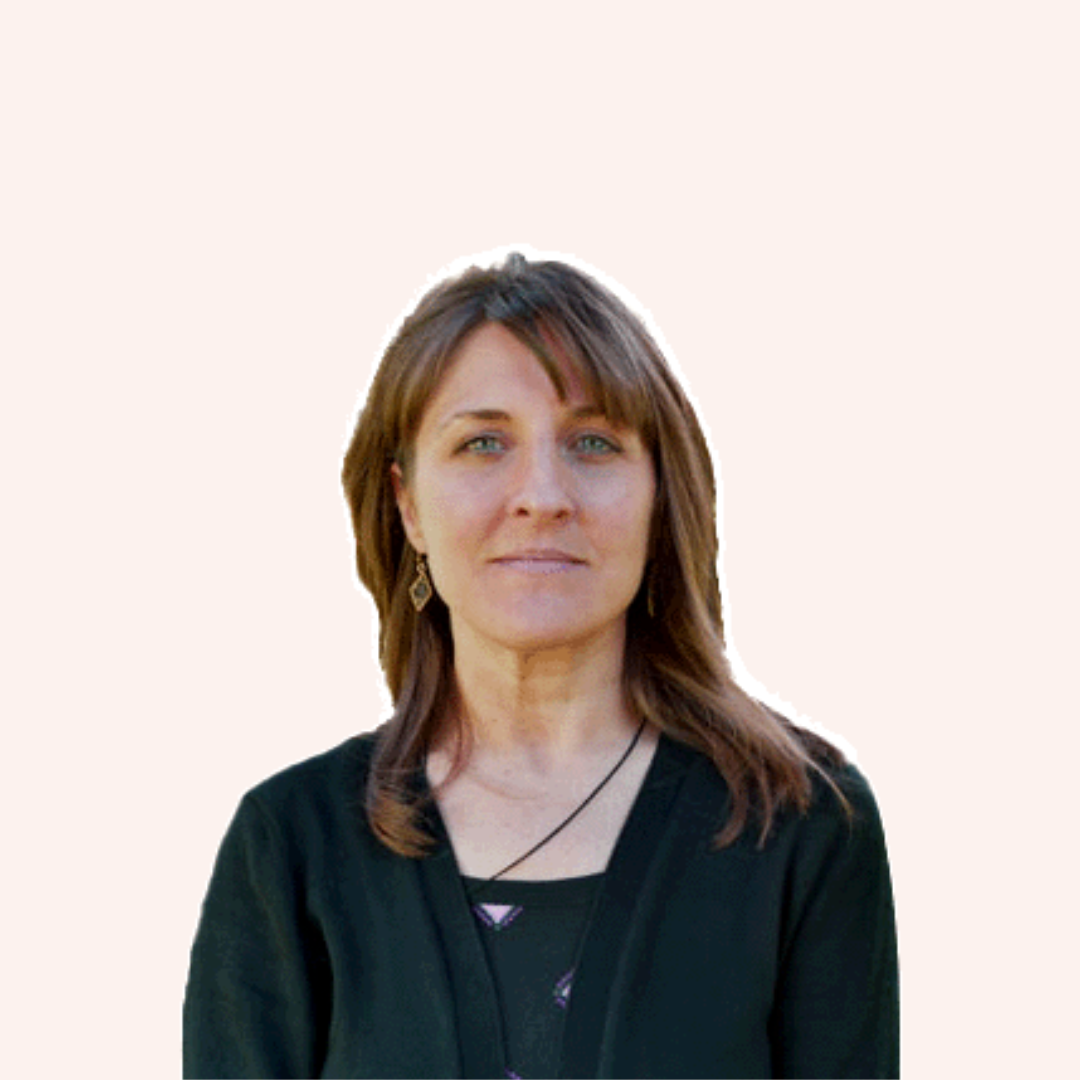
Presvytera Melanie DiStefano: Hello, and welcome to Family Matters. My name is Melanie DiStefano, and today we have a very special guest, Metropolitan Savas (Zembillas) of Pittsburgh.
He is a native of Gary, Indiana, the second of six children, a graduate of Colby College in Waterville, Maine, with a BA in philosophy and English literature, and of Holy Cross Greek Orthodox School of Theology, with an MDiv. He also studied at Oxford University, England, from 1987 until 1994 under the supervision of then-Bishop Kallistos (Ware). On November 3, 2011, the holy and sacred synod of the Ecumenical Patriarchate in Constantinople elected him to succeed the retired Metropolitan Maximos, now of blessed memory, as metropolitan of Pittsburgh. He was enthroned at St. Nicholas Cathedral on December 8.
I am a spiritual child reared under the see of the Metropolis of Pittsburgh, and I was blessed to attend the enthronement. A few things left an impression on me. Metropolitan Savas openly expressed joyful gratitude in both his words and his manner, his emotions. He allowed us into his personal experience. It was a very warm embrace. The then-Archbishop Demetrios was very intentional of reminding the faithful present of the great love that God must have for us in Pittsburgh, being that we had been blessed to have such faithful shepherds of Metropolitan Maximos, now of blessed memory, and now receiving Metropolitan Savas as our new shepherd, both of whom being loving, faithful men devoted to Christ and his Church.
So now, ten years later, in honor of Father’s Day, I really do feel blessed as a child of this metropolis to have an audience with Metropolitan Savas. Welcome, Your Eminence.
His Eminence Metropolitan Savas of Pittsburgh: Good morning, Presvytera. Thank you for your kind words.
Presv. Melanie: Thank you for being with us. Let’s just dive in. We want to understand a little bit more about the teachings of the Church with regard to disability. From a theological disability, how can we understand the whys and hows of physiological disability as Orthodox Christians?
Metr. Savas: That’s a very good question, and thank you for it, and it’s a question that is, in a sense, at the heart of, as it were, the problem of God. A lot of people have a hard time embracing the concept of a good and loving Creator God, a sustaining God who allowed for the possibility of imperfections in his creation, and by “imperfections,” I don’t just mean physical disabilities or whatever mental shortcomings, whatever, not just relating to the human but just catastrophes, death. So there is a deep problem in trying to reconcile the way things are and the way we intuit they were meant to be, or the way they could be or should be.
As I said, it’s at the heart of, as it were, the theological problem or the theological challenge. You can see that kind of in the minds and the hearts of the disciples of Christ. Just a couple of Sundays ago, we focused on the gospel passage of Christ’s healing of the man born blind, and how the disciples, on encountering the man, directed their uncertainty to their Rabbi, to Jesus, and said, “Who sinned? This man or his parents, that he should be born like this?” They see something is lacking in the person, and they perceive that it has something to do with judgment, that it is a form of punishment, whether punishment for him, for a sin known or unknown, or a punishment on his parents for the same.
And Jesus dismisses those options and says that neither of those cases hold here. He was born like this that God may be glorified, that the works of God may be made manifest in him. And that’s a wonderful and mysterious response, but at the very least it deflects us; it turns our attention away from the association of… the notion of cause and effect, that people are born a particular way because of a failing, either moral or spiritual, that it’s a manifestation of God’s judgment.
My understanding of it is that its consequence… And to go back to the bigger question: How do you explain a universe that is manifestly not perfect? As St. Paul speaks about that in the eighth chapter of Romans when he talks about all creation being subjected to corruption and groaning for the revelation of the glorious liberty of the sons of God, that all creation is somehow implicated in some great calamity, to quote a Roman Catholic saint, John Henry Cardinal Newman. He talked about an aboriginal catastrophe—“calamity,” that’s the word he used: aboriginal calamity, which is his way of saying “original sin,” that we’re out of joint with the purpose of creation, that something happened in our primordial… back at the beginning of our relationship with God, that created a gap, a space, for evil, imperfection, to corrupt creation; a kind of a virus came into the works.
I can’t confine myself to a single metaphor about it. I mean, in the past I’ve spoken about a kind of a hail of bullets that are ricocheting through creation and are hitting people indiscriminately, that evil is not directed at the deserving. I mean, the problem of evil is that it hits the innocent, that it strikes indiscriminately, and the solution is not an intellectual solution; there is no answer. The answer is experienced in the life and ministry, the passion and resurrection of Christ. Christ doesn’t say, “I’ll protect you from that,” as much as he says, “I’ll take those hits. I’ll come into it and suffer with you, to show you that the suffering does not separate me from you, that I’m with you in your suffering. I know what you’re going through. Just trust me; stay with me. Endure this with me. Let me help you, because on the other side of this is the glorious liberty of the sons of God, the children of God, the resurrected life.”
So that’s a long way around, isn’t it?
Presv. Melanie: Well, it’s important to talk about, and a couple things come to mind just in what you said, that kind of ricocheting bullets. I am recalling a memory of my son, who was very medically challenged as an infant. He was a premie and had a lot of medical conditions and was in the NICU for a long time and was very sick. The doctors didn’t even think he would live a few hours, and time after time he would have close hits, close calls with death, and I just remember saying, “Dear God, why is he so afflicted?” and I was just so intensely grieving for his suffering, and it was funny because I was in the middle of feeling this intense grief, and then this doctor was visiting from Australia, and he came over to me, almost excited and joyful, after reading Michael’s case history and examining Michael, and he said, “Your child has dodged so many bullets.” [Laughter] And I thought to myself, “My goodness, that’s the difference with perspective.” All I could see were the bullets that hit him, and I couldn’t see that he was also being spared a lot and that God’s hands were embracing Michael and holding him.
It’s just really important, and even the issue, like you said, Christ being with us in the suffering, and not only being with us, but he, in his suffering, not only gave meaning to suffering but made it a vehicle for salvation, a vehicle for the resurrection and glory, like you said, the glorious liberty that will come. So that means any of our suffering can be, if we allow it, in him, a vehicle for his glory.
Metr. Savas: And that, you know, come back to the word “mystery.” I don’t have answers; the Church doesn’t have answers. The Church has entries into the mystery. We participate in the mystery of salvation; we participate in the mystery of being clothed in Christ’s power, especially in our weakness. St. Paul is very clear on that, when he says that three times he asked the Lord to take from him the thorn in his side, an unspecified source of pain for him, whether it was a physical thing or a psychological thing or a spiritual thing, it’s not clear, but it was some kind of an impediment that he experienced, and the Lord said, “No, my strength is made perfect in your weakness. If you were strong, you might think you were doing this. You might attribute your achievements to yourself, but the fact that you are weak and you are accomplishing these things is evidence that I am with you.”
Presv. Melanie: And we need to be comfortable with our own vulnerability and weakness.
Metr. Savas: And know that we are with Christ in those moments, that Christ doesn’t necessarily… I mean, he doesn’t protect us from pain and suffering; he preserves us in pain and suffering. He perfects us in pain and suffering. I mean, there’s something that… I don’t want to be condescending or anything like that. It’s hard: we’re going through a state where we’re very, very conscious of our language, and we don’t want to use any hurtful language. It’s almost… to speak in terms of the saints, they would say that there’s a kind of privilege to participating in the suffering of Christ. There are those who ask not to be relieved of their burden, but just to be strengthened in their burden.
And how many saints do we know that that actually died what we would say are horrible deaths in terms of not just violent deprivation of life and limb, but just of slow, painful diseases that rendered them incapable of free movement or… I think of St. Nikiphoros the Leper. I was privileged enough while serving on the holy synod of the Ecumenical Patriarchate some years ago to be among those who signed off on, as it were, the canonization. We didn’t make—the synod doesn’t make saints; it recognizes saints. When we say we canonize them, we insert the celebration of their memory into the calendar for the sake of the whole Church; we regularize the veneration of them for the whole Church.
We canonized St. Nikiphoros the Leper, who was a person with great disabilities from an early age, and yet fell asleep in the Lord in the early ‘60s—1964, I believe—and by the time of his death… He suffered leprosy at a time before we could deal with it; it’s no longer the horrible thing, the horrible experience of a mutilating condition that it was in times past. So he was in that, among the last generations of those who suffered leprosy in the biblical sense, as it were. So by the end of his life he was without fingers, without toes; he was blind; parts of his face had fallen away—and yet there were just streams of people coming to him in his hospital in Athens for his blessing. He wasn’t a priest; he was a simple monk, but they experienced in his presence calm and joyfulness that spoke to them of the presence of the Holy Spirit.
I just feel distinctly honored—“honored” is too weak a word—to have been among the signatories on the act of his canonization, and especially now in these troubled times, many people have run to St. Nikiphoros for his prayerful intercessions during this season of the pandemic. He’s become very quickly beloved of the people of God because he is a partner in suffering.
Presv. Melanie: Indeed. Thank you for sharing more about his story and reminding us the depth to which he did experience loss. There are a couple things you said I just wanted to reinforce. That mystery, that we shouldn’t try to explain or want to explain in a cause-and-effect type of way, and that’s something, as a mom of a child with multiple disabilities, I am guilty of. “What caused this?” because if I find the cause, I can find healing for him. Or it just helps give us a little comfort to think we have some… We’re less afraid of what we understand, so to have some understanding of the causes of things makes them less scary or less uncertain. But just trusting in this mystery of salvation is so important for us as families.
And also, just something else about the leprosy. Sometimes—and this is very unfortunate—but community members do treat people with disabilities as if they were lepers. And maybe that’s changed; I think that’s changing. Thank God, people are more familiar with disabilities, not as afraid of them, not as misunderstanding of them, but there still exists stigma within any community. I’m not even talking about just Greek Orthodox; I’m talking about any community you find. And also within families: sometimes we have to fight the effects of what we’ve learned from our culture about people with disabilities and, as much as we love our children or our loved ones with disabilities, there’s some work we have to do on ourselves to not care what other people think and to realize that Christ wants every member of his body connected to him and in communion with him.
Metr. Savas: I am really grateful for that and I want to affirm—I don’t want to say that we should not investigate on a medical level what could… My concern is really with not the cause-and-effects on a biological level, but more on an ontological or a spiritual level. Is there some sort of an offense for which this is a payment or retribution, judgment? On that level, I think it’s inappropriate to think in terms of cause and effect, but certainly cause and effect, going back and tracing things to their origins, it’s very important for the pursuit of cures. I mean, I’m not suggesting an indifference to suffering. Certainly, you do want to be attentive and careful, and you don’t want to exacerbate things. You want to contain the suffering as best you can and address it at its earliest appearance.
The other question about the treatment of people with disabilities as if they were, to use again the biblical experience or language, leprous, and therefore something or somebody to be avoided, well, first of all that speaks to fear of… and ignorance, in terms of contagion and those kinds of things. And also it’s something that’s been with us from the beginning, a sense of self-preservation, that when we see something that is outside of, as it were, what we would call normal, and if we feel threatened by it, we protect ourselves by distancing ourselves from it.
Our current treatment of or attitude towards people with disabilities is so very different than it was 2,000 years ago, largely because—I would say primarily, if not exclusively, because of the Christian, the interjection into our consciousness of the significance of everybody in Christ. I mean, imperfection, as it were, disability or perceived disability, imperfection in classical Greece or in antiquity was dealt with by exposure. If you didn’t get the kind of baby you wanted, you just left it to the elements, and that’s just how societies were cruel that way. And one of the things that set Christians apart was that they didn’t run from, but they ran towards suffering.
And now that we’re dealing with… we’re working our way through the pandemic; we’re at the tail-end of this current wave of the pandemic—and may God in his mercy protect us from any future calamities—but in ancient times we know from the historical record that in times of what they would have called plague, and from the description of the symptoms, it was almost certainly things like measles or an intense flu or some kind of chickenpox or something like that, at the first sign of such a thing, whoever could ran to the country, to the fresh air; they abandoned people to their fate.
And the Christians acted differently. Christians nursed each other through these periods, and most of these kinds of things were survivable with a little tender loving care: a little chicken soup, a little whatever. You’d get there, and once you were on the other side of that, you had an immunity, and you could walk into crowds of such people and minister to them as if you were a ministering angel. People experienced the healing presence of concerned and loving Christians during these particular times in such a way that we can say that pre-pandemic in particular regions of the ancient world, Christians were, let’s say 10% of the population; on the other side of it, it would go to 30 or 40%, because people were beholden to the Christians for ministering to them.
So that’s what set us apart, but it’s still a little leaven. You know what I mean? The loaf is not yet risen to the fullness of what it can do. We’re so much further along than we were, but we’re nowhere near where we need to be in terms of awareness of the other as person and ministering in love, not only to the person himself but to the people around the person, the person with disabilities. The ministers need to be ministered to as well. So it’s concentric rings of love that we have to create and sustain.
Presv. Melanie: I like that image of the concentric rings of love, and in that ring there’s such a variety of disabilities. Some disabilities are physical, some are cognitive, some are medical—you have many medical or health complexities; there are a variety. So many people with disabilities are typically very capable. My son happens to have a lot of cognitive and medical issues that he doesn’t fit into the “capable” category that we tend to hold in our understanding and culture. However, when I look at his life from the perspective of Jesus Christ and his love for all people—the blind man, Bartimaeus, yelling out for his attention and people trying to shush him, and Jesus says, “Come to me.” Jesus was not afraid of vulnerability, and counted every person uniquely beautiful and valuable. I think that that reminder to us… If we can see that prayer of just having eyes to see one another, each of us, with or without disabilities, for the child of God that we are, then these things might start to change even more. Like you’ve said, we’ve come a long way.
There’s a quote that I don’t know—somebody out there probably knows who said it, but it resonated with me, and it reminded me of the early Christian Church. It said, “A measure of a healthy society is in the care of its most vulnerable members.” I felt like that was really powerful, and I felt like that happened in the book of Acts a lot as well. The widows were not forsaken because they could not support themselves. There were things like that that happened.
But the other side of the coin is that that person with a disability has so much to give, even my child, Michael, who does not speak, whom most people would wonder the usefulness of. He has taught me more than almost anyone in my life, aside from Christ himself, and through Christ he continues to teach me.
Metr. Savas: And I’m grateful for that, and I can affirm that your love for him is evident, radiant, infectious. I see him create a kind of lens through which to experience Michael, a lens—you see him as beautiful, because you take pride in him. You are so good with him, and I just… I wish I could be bolder. I would love… But you know, we have to learn how to interact with people with disabilities, because sometimes our instincts are not appropriate. Reaching out—an embrace might not be the thing. You have to get permission to, or even to help somebody in a wheelchair, you have to not assume that they want assistance. You always have to ask and wait. So there is a kind of a learning of an etiquette. It’s not just an intuitive thing. So I learn by watching loving caregivers what is acceptable and what is not, and how to help interact in a way that’s dignifying.
I’d like to speak, if I might, to kind of return to the notion of the Christian attitude, not in a sense of triumphalism. I mean, if it’s true of other religious traditions, I’d be happy to hear about it. All religious traditions have compassionate aspect and teach compassion, but nonetheless, I want to focus on this one thing. I took a group of young adults—the OCF; the Orthodox Christian Fellowship—to the holy land, to a place called the Four Homes of Mercy, which is just outside of Bethany, the traditional home of Lazarus and Martha and Mary, in the Palestinian territories. It’s an institution; it’s a home for as many as a hundred—I think the occupancy when we were there was in the 90s—for people with severe disabilities, who couldn’t provide for themselves. And they were largely people who had been abandoned in public spaces. This is an Orthodox Christian ministry, but every occupant was a Palestinian Muslim, whose culture treated disabilities as stigmatizing, that if somebody… if a woman were to give birth to an imperfect child, as it were, this is a kind of a current extension of the exposure thing: you just leave it in a public place and disassociate yourself with it, in the hopes that maybe somebody will pick it up and provide for it, out of charity, in its last days. But some of these people have been living there for decades! It’s an incredibly moving place, but it’s also, oh! [Sigh]
Presv. Melanie: It’s heartbreaking to see people abandoned.
Metr. Savas: Right, but they’re here, they’re treated so beautifully! I mean, their needs are met; the staff is largely interesting. The money that supports it is largely from the Orthodox Christian community, but the staff is Muslim, and they’re ministering to these abandoned Muslims who have been brought in by the Christians. They have activities for them, those that are capable of passing a ball around or clapping to music or whatever, because there’s a wide range of disabilities there. Some are completely bed-bound, and their needs are enormous, but others less so. It’s so clean. They’re so well provided for. The atmosphere there is so affirmative. You feel the goodness and the mercy of the place.
Presv. Melanie: That’s beautiful.
Metr. Savas: It was really a life-changing experience. There was kind of a fire to the place. It kind of burned off your trivial concerns and cleansed your perceptions, as it were, for the time you were there and beyond.
Presv. Melanie: I think one of the lessons that I’ve learned from being Michael’s mom is every action, every moment of life has the potential to have meaning, every experience. Sometimes we count little things little, but there’s no little thing when it’s done with love.
Metr. Savas: It was! It was just so grace-filled to be outside in the sun with those who could be brought outside, just to experience the goodness of the natural world and joyful interaction with… I mean, I was so impressed with the givingness of the young adults that went there as well. Many had family experiences and were, as it were, bringing that energy with them. But I remember on our last evening with them, there was a dance that was really… again, a gathering with music, in which, again, those who could enjoy it and not be irritated by the pulsing music or the loudness of it or whatever, those who could, took great—their joy at the kids’ joy was so infectious! There was just… The kids were moving for them and dancing for them and expressing… It was just wonderful. It was probably one of the most exhilarating moments of my life.
Presv. Melanie: Wow. I feel I see that in people with disabilities even when I pick up Michael from school. Sometimes my husband will say, “Melanie, I was just brought to tears watching the children come out. They’re so beautiful.” So you can just see God’s grace in this humble person before you; there’s no pretense.
As we wrap up, we talked a lot about the theology of things, but if there’s any kind of encouragement for your parishes or expectations for inclusion, accommodations, or just parting thoughts and encouragement for people with disabilities to be not afraid to members, active members in their communities—if you could speak a little bit on that, it would be wonderful.
Metr. Savas: Well, I want to express my gratitude to God for the witness of you and another presvytera of my metropolis, Presvytera Elaine Madonis Stavropoulos, of Columbus, who have taken their personal experience of ministering to children with disabilities… They’ve expanded on that and gone outward to educate the community and support those in similar situations and expand the possibilities for worship. I would direct people to your ministry, to be in touch with you and Presvytera Eleni at her fellowship of St. Matrona, which you can find on Facebook. They have regular gatherings for worship for people with disabilities.
It’s enormous—but it’s the beginning. Whenever things like this happen, it’s a vision of the possibilities, an in-breaking of the kingdom. The impulse may come naturally to be loving and helpful and supportive, but even so we need to be shaped and directed. So we rely on people like you to help sharpen our senses and perfect us in our personhood in order to be supportive of peoples with disabilities and the supporters of peoples with disabilities. We have to just keep creating circles of love. I’m grateful where I find them, but more is better. In this case, more is better!
Presv. Melanie: We thank you so much, Your Eminence, for your time, for your love, for offering these words.
Metr. Savas: And love to your husband and your parents and your wonderful Michael.
Presv. Melanie: Thank you, Your Eminence. Thank you.
Metr. Savas: God bless.
 Pres. Kerry Pappas
 Pres. Melanie DiStefano