
I’ll call this podcast: One Race, the Human Race, part two. Just looking at the human race statistically, right now there are 7.7 billion human beings on our planet, and if we rewind history all the way back to the beginning of humans, we’re told that humans began, oh, about 50,000 B.C. or whatever. Since then to this minute there are roughly 108 billion people. That’s the human race. We’re called in our hearts to have one humanity, one race. I’ll explain and go into that a bit further if we might.
I would suggest, for those of you who may not have heard my last podcast, entitled The Human Race—I’ll call that part one—you might want to go back and listen to that. It’s different from this. It’s not a prelude, and you don’t have to, and this is a stand-alone podcast, but I would just recommend it.
We want to be careful about what we do. I’m interested, as I look around and watch the different forms of explanation given for the Gospel and given for Jesus in our culture. I would just have to say there are different Jesuses being proclaimed. Though I don’t do this myself, I have looked a bit at Sunday morning televangelists and have seen a gospel message that I simply don’t think is the real message of Jesus. Much that’s being preached we might call the Acquisition Gospel—“Name it and claim it”—well, I don’t think so.
I know one wife of a televangelist who said she heard angels telling her to go buy new shoes, and she already had hundreds of pairs of shoes. Perhaps—I don’t know what angels tell people—but I’m not sure that that’s the right direction. I’m not sure that the gospel message is about centrifugal force that we get [sucking vacuum sound] energy and things into ourselves; rather, it’s about sacrificial love and going out.
So we look at ourselves and we look at Jesus’ call. Jesus said:
Go, therefore, and make disciples of all nations, baptizing them in the name of the Father and of the Son and of the Holy Spirit, teaching them to observe all that I have commanded you. And lo, I am with you always, to the close of the age.
That’s from Matthew 28. But the real message is the message of, as St. Paul says, the crucified Christ, the Christ of resurrection and joy after the crucifixion, and as Jesus said to us, “Take up your cross and follow me.” That’s the way we begin.
We are Orthodox, though this is said by many non-Orthodox as well. Fr. Florovsky, one of the first deans of St. Vladimir’s Seminary, defined Orthodoxy as “the absence of extremes,” and I would go so far as to say Christianity is the absence of extremes. There are some within Orthodoxy and within Christianity generally who are extremists, both left and right. The basic message, again, is sacrificial love. One race, the human race, I embrace myself and all others to the extent that I can.
I spoke with a seminarian once about this issue, and he was saying that he’s a senior, and finally he had a course in apologetics. His family is not Orthodox. He’s ready to go home and finally preach Jesus to them and get them to convert. I could tell by the turn in his voice that there was a certain stridency, a certain anger in his tone. I said to him, “Well, my opinion is people are only changed, converted, by love.” He simply said to me, “Well, I can’t do that.” I said, “Well, okay.”
But it is true: it’s only by sacrificial love that we can actually preach the Gospel, the real kerigma, as taught by St. Paul and the Church Fathers: death, resurrection, non-violence, and the stunning sentence of Jesus on the cross: “Forgive them, for they know not what they do,” peace, and joy.
We’re careful not to reduce our ideas—we’ll say our personal philosophy, our life space—we’re careful not to reduce it to slogans of any sort. We don’t say one race: all those of one race are communists—no; or communism—no. As we saw in Russia—no. Simply, the communism in Russia led to millions of deaths and the gulag. We don’t call other people Communists or Nazis or any other such ugly titles; we’re careful of all that. We’re also careful, if we’re really going to talk about the one race, the human race, and that we’re inclusive and unifying, not delving into conspiracy theories. Nope, conspiracy theories are built on questions that really have no answers that are built on often connecting dots in an unusual way. First we have to answer the question “Who really killed John Kennedy or Abraham Lincoln?” Such questions have no adequate answers, and therefore spread the visions. Conspiracy theories inflame the blame game with easy answers.
One race is basically about humanity of non-violence and sacrificial love. We start with the little group of humans around us: our family, our neighbors. We start with ourselves. Solzhenitsyn said about where real violence really is, and you who are listening know what he said, but I will quote it for us now. Solzhenitsyn said,:
Ah! If there were only evil people somewhere insidiously committing evil deeds and it were necessary only to separate them from the rest of us and destroy them. Ah! If only it were all that so simple. But the dividing line dividing good and evil cuts through the human heart of every human being. And who is willing to destroy a piece of his own heart?
Well, doesn’t that call us to attention?
I’ll now play a song for us. And, yes, music does take us to a new, softer, more receptive place of unity in our own psyche. I’m going to play Abouna’s Angels singing “My Spirit Seeks Thee.” I’m playing this song for myself and for you, that our spirit might seek the real Christ, the real Christ who lives deep within us, that spot of light within us. And then we preach him by our behavior, sometimes by our words, and it’s about non-violent self-sacrificial love.
My spirit seeks thee early in the night watches. For thy commandments are a light upon the earth. Alleluia, alleluia, alleluia!
Learn righteousness, you that dwell upon the earth. Alleluia, alleluia, alleluia!
The one race is basically a humanity of non-violence, of self-sacrificial love. We started with the little group around us—our family, friends, and neighbors—and basically we start with our own heart.
One race, the human race, means all the living humans—those numbers I quoted in the beginning—in my heart, the inner universe and the inner human race, I try to live in the present moment, solving what philosophers call “the one and the many,” or, as poets speak, “the drop of water contains the entire ocean.” We would say for us that the drop of water can mean the present moment: the present moment contains the entire, whatever we say, universes in the present moment. The present moment is when we meet Jesus Christ, God the Father, and the Holy Spirit. We try to make the one race a race in our human hearts. We try to become as much like Christ as we can: non-violent and loving.
That’s as far as I can go! So, for Ancient Faith Radio, this is Dr. Albert Rossi, asking you the listener and me to support Ancient Faith’s fine ministry with our prayers and with our finances.
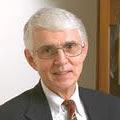 Dr. Albert Rossi