
Hello, everyone, and welcome to the first episode of Healing the Unresolved: Putting the Past in the Past. We’ve received some excellent questions, and we will make sure to protect the identity of each one of the brave individuals who offered up their questions. The first question: How does the Church think about mental health? Does it advocate the use of secular therapy, psychiatry, or neuroscience? And what about conditions like PTSD and complex post-traumatic stress disorder? So let’s first begin with the first part of the question: How does the Church think about mental health?
First, increasingly today we’re hearing more and more dialogue and talk and discussion in the Orthodox Church about getting help to those who are suffering with mental health struggles or with mental illness, and the Church is increasingly becoming very open to it, has certainly validated it, and has even created committees and groups and organizations to help address the emotional, spiritual, and mental health needs of the faithful of the Church. For example, the Assembly of Bishops compiled a provider list of all the Orthodox therapists in the country and divided them up by states. It has their contact information, so that if any Orthodox Christian is seeking an Orthodox counselor, they have a resource to go to.
There’s mental health committees that the different jurisdictions have. It’s being talked about increasingly among the youth groups. So it’s pretty well entrenched now that the Church is very supportive and very much acknowledges issues pertaining to mental health and mental illness. So the Church certainly does not deny, but it also does not really articulate what mental illness is, but it acknowledges it as a legitimate illness.
So it’s very important also that, for all the people listening right now, if we have some struggles, it does not mean we are mentally ill. So we have to be careful how we apply that term. For example, if we’re going through a tough time and maybe we’re feeling anxious or sometimes we’re feeling depressed, that does not mean we are mentally ill. It means we’re struggling a little bit. And so, indeed, if everybody who struggles or everybody who experiences some anxiety or depression is mentally ill, then indeed all of humanity is mentally ill, and perhaps even on some level we could make that argument. But for those listening and for the people who submitted these questions, make sure that you’re not too hard on yourself by fearing or thinking somehow that you’re mentally ill. You’re a normal human being. Everyone who submitted these questions are normal people who had abnormal situations occur in their life.
So we’ll get to more of what I just said. I want to go in order of breaking down the question here. The next part of the question was: Does it advocate the use of secular therapy, psychiatry, or neuroscience? So, yes, the Church is very supportive of seeking counseling. Secular therapy, in essence, is going to a therapist who is not, say, Orthodox, or that might be using clinical skills that they learned at a secular university or college or another facility. And there is nothing wrong with that; however, we just want to make sure that if we do seek a non-Orthodox therapist, that they are sympathetic to our faith, that they are respectful and mindful of boundaries, that they do not pathologize our faith. What I mean by that is, when they hear of how long our services are or how often we go to church or about our fasting practices, that they don’t begin to pass judgment or question it, especially directly to us, or even start to implant doubt in us in our practices in these areas. We could go on with many other examples, but I think the point is clear.
So sometimes we have to shop around [for] that therapist who’s very respectful and mindful of faith issues and certainly doesn’t even go there, but very much leaves that untouched, realizing that this is something very important to us. It’s our spirituality; it’s our faith background. And the good therapists know to leave that alone, that it’s not their business, and to focus instead on the specific reasons why we sought them out. That is what a healthy, well-trained, and well-adjusted secular therapist would do. If ever we try a secular therapist and suddenly they start having a lot of thoughts and opinions about our faith and our practices, especially ones that are negative, it’s time to not schedule any appointments and find someone else.
Many of us feel a pressure, that if I’m going to go to counseling, it has to be an Orthodox therapist. To be blunt, just because somebody is an Orthodox therapist does not mean that they are a good therapist or well-trained or will be able to help us in whatever it is that we are struggling with. There are many excellent Orthodox therapists out there, but in the end we want to meet with somebody who is trained in helping people get through what we are struggling with. That is very important, because we could find that Orthodox therapist, but if they’re not well-trained or if they don’t really know how to treat what we’re struggling with, we’re spinning our wheels and we could waste a lot of time. So just because somebody is an Orthodox therapist does not mean they’re a good therapist. There’s a lot of very good non-Orthodox therapists out there who are very respectful of faith and might be Christians themselves; they just might not be Orthodox Christians, but they know to leave our faith untouched and respected accordingly.
So we don’t want to throw out the baby with the bathwater, but we do want to use discernment. Is this someone that will respect my faith? If we want to try, say, a secular therapist, we can interview them and say, “One of my concerns I have is that my faith and my spirituality is very important to me, and that is separate. That’s my personal life. I’m coming to you to work specifically on this.” And you can tell by their reaction to that whether it’s going to work or not. So that should answer the second question: Does it advocate the use of secular therapies, psychiatry, or neuroscience?
Psychiatry? Yes, there’s nothing wrong with having a psychiatrist. Typically—there’s always exceptions. Typically, psychiatrists today do medication management and monitoring. However, there’s always exceptions. In certain areas there’s psychiatrists that still do traditional counseling, but there are Orthodox psychiatrists out there. So psychiatrists have a deeper expertise in the medications used to treat mental health conditions or emotional struggles. Many people these days, simply because many of the good psychiatrists have such outrageous waiting lists, will go to their primary care physician to get a prescription, and most primary care physicians are comfortable prescribing just the basic mainstream medicines, but if somebody needs something different or needs a little more supervision, they go to a psychiatrist. But there’s nothing wrong with an Orthodox Christian using a psychiatrist, again, especially as long as they do not pathologize our faith and they respect boundaries and are mindful of it.
The Church absolutely acknowledges neuroscience. This is a new field in which we’re studying how painful experiences affect the brain, and how the brain affects our reactions and our emotions and so forth. And this is especially relevant in the field of trauma and healing from painful and profoundly painful and disappointing experiences that we wish did not happen and indeed should not have happened. And so many of the discoveries in neuroscience have radically changed how we treat conditions like post-traumatic stress disorder, or how we help people heal from just profoundly disappointing and painful experiences in their life.
That leads us to the next part of the question: Does the Church acknowledge conditions like post-traumatic stress disorder or complex PTSD? And the answer is yes. I mean, to deny it would be quite controversial, because what about all the combat veterans out there that have witnessed things that they should not have witnessed and are carrying around profound grief? With PTSD or CPTSD, the mind has suffered an injury, an injury in the form of experiencing something unnatural, something that violates our profound trust in others in life and our own safety, even. And it’s an injury that requires certain techniques, certain behaviors, and certain activities to heal.
What’s the difference between PTSD and complex PTSD? The differences are mainly in two areas. First, most forms of CPTSD took place early in life, in childhood, and tended to go on for a long period of time. So being subjected to traumatic experiences chronically and over a long period of time, as CPTSD is commonly seen in individuals who have been exposed to it starting with childhood. Post-traumatic stress disorder is often, but not always, linked to a singular event. With CPTSD, there are maybe a few extra areas of impairment; maybe the effects are a little more profound and deep in certain areas, like regulating our emotions or relationships, but there’s a lot of overlap towards the two, and I don’t know how productive it is to draw distinctions between the two. In the end, it’s a form of post-traumatic stress disorder, and the healing path is very similar. So I don’t know how productive it is to spend time figuring out: Do I have PTSD or CPTSD? Or rather to focus on the healing part. I think that is much more productive.
But the main component to post-traumatic stress disorder is when we have been in situations where we’re acutely afraid and experienced powerlessness. And we may or may not have witnessed someone else’s life being in danger or threatened. Things can be traumatic without actually witnessing someone dying or being killed or even getting close to dying or being killed. Just the presence of acute fear and powerlessness is enough to do it.
When we’re struggling with post-traumatic stress disorder, we tend to struggle with re-experiencing and avoiding. Re-experiencing, obviously in the form of intrusive thoughts, flashbacks, nightmares, feeling feelings from the past again, but also just always feeling like the past is playing itself over the present, being easily triggered in the present so that if somebody does something or doesn’t do something, boy, we feel like it’s 20 years ago, or whenever that painful experience was from the past. We always feel like the past is bleeding out into the present, and that can lead to avoidance, where we avoid anything or anybody that reminds us of our painful experiences. We avoid other people, we avoid love, we avoid intimacy, we avoid trusting other people, being close to other people. We tend to go through life with a combative or defensive disposition of heart, like we’re ready to fight with people. And really just spend so much time and energy in a state of avoidance, of avoiding anything that might make us feel how we did in the past. And when we do that, it’s quite tragic, because we miss out on those deeper life experiences that are precisely the ones we need to heal. So we will get to that, I think, in some of the later questions here.
Hopefully, that answers the first question. It’s an excellent question. So now the second question—and I’m going to work hard here to protect the person’s identity and even not to share every detail of their life story, because even that could reveal something. So the questioner just shared that they had a very painful early life, one that they continue to struggle with as an adult. One of the parents struggled with pretty significant mental illness; as a result, there was neglect and abuse. Eventually this brave individual was raised by a relative, but now struggles with some post-traumatic stress disorder and has done years of therapy, and still struggles but not quite as much as before getting help.
However, some of the areas where they’re still struggling is that they are guarded in their closest relationships, and they struggle to establish or to maintain trust, and that they tend to withdraw whenever they are upset. They struggle with despair, especially in close relationships, and they kind of doubt how they’re grieving, that they’re not grieving right. Each new loss in life confronts them with feelings of despair and discouragement and feeling like they’re being set back again to the beginning.
So God bless you to the one who asked this question and to everybody who has submitted questions. It’s clear that you’re very resilient and that you have come a long way, especially that you’re still on the healing path, and that’s the biggest success there, that you did not give up. What it seems—what I’m understanding from the question is that sometimes we still struggle with triggers. We get confused sometimes. We say, “I did the counseling. I did the talk therapy. I did the journaling. I did the gaining of insights and self-awareness. Maybe even I did the CBT, the cognitive behavior therapy. I did the grief work. I’ve shed the tears. I don’t know that I can cry any more. And I’ve told my story over and over again—and yet I still struggle.” Sometimes when that happens, we feel despair, because it’s like: What have I missed? What stone was unturned? Why am I still triggered? Why do I sometimes have interactions or why do sometimes life changes or events make me feel like I’m back at the starting line again in this healing work? Or why do I feel overwhelmed or anxious at times, or like I accomplished nothing? Or why do I feel like the past is replaying itself again in the present?
The answer to this question lies in what we’ve learned from the gains in neuroscience, really, and there’s good news here, because the healing work is not more complex. It’s not more overwhelming; it actually will give us hope, because it simplifies the healing work, and it’s something that, really, many Orthodox Christians will be comfortable with, if not everyone, and it’s very faith-friendly. And so there’s a well-known psychiatrist out there, Dr. Bessel van der Kolk, who has done immense work in the field of neuroscience. He wrote the book, The Body Keeps the Score. But he talks about limbic system therapy.
Now, many of us hear that; we’re like: Oh, well, that sounds too complex! It sounds like something I wouldn’t even begin to understand. But what it teaches and what it has discovered is that true healing occurs by eliminating the avoidance in our life and opening ourselves up to and allowing ourselves to have deep experiences with activities or other people that override all the painful things that our traumatic experience has taught us. So in essence we have deep, affirming healing experiences, that often involve other people, in the present that override the fear part of the brain.
When we are trapped in avoidance, we tend to do the very things that deny us that true healing: we avoid people, we don’t get close to people, we shut down around other people, we disengage, we keep a distance. We do all kinds of things to try to keep us safe but that actually keep us trapped in our painful experience or in our trauma, you see. So there’s all these discoveries out there about neuroplasticity, about how when we allow ourselves to have new experiences, that it can rewrite those neural pathways in the brain that had been formed and shaped by our traumatic experiences. So that gives us great hope.
We’ve also discovered about how traumatic experiences can cause memories to not be integrated properly. They form—these painful memories form these neural networks that are frozen, that are not in a past narrative, and that have not been properly integrated. So they’re constantly being triggered by present-day events. So every time one of those neural networks gets activated that has not been integrated properly like normal memory, we feel like the past is happening all over again.
So there’s some really neat treatment things out there like EMDR, which is extremely faith-friendly; it’s not talk therapy. Eye movement desensitization reprocessing. Anybody out there that is okay with counseling would be extra okay with EMDR, because, again, there’s no straying into belief systems or discussing of it. It’s very little talk therapy. But I’ll leave it to each listener to research that on their own, but it is extremely faith-friendly. It helps us resume processing so that those memories from painful experiences that were not integrated properly get integrated properly into the brain so we don’t just know that those painful experiences were in the past, but we feel that they are in the past. It’s very profound and powerful, and I’m sure that in the future we will speak more on that.
For the brave individual who asked this question, that is where your work lies. The only way out is through, so when we’re re-engaing humanity… There’s a new book coming out. I talk about giving humanity a second chance, and when we start to give humanity a second chance is when we start to heal. So when we’re engaging humanity and we get hurt again—which, inevitably, we will disappoint each other—the key is to not turn away, to not fall back on those protective and defensive responses, but to lean into the pain and push forward and to remind ourselves: the only way out is through. This is not the past. This is not the year of whatever year. It’s now 2022. But I have to create new memories with humanity, that once I re-engage humanity and I start having positive experiences and I push forward through the discomfort, that I’ll create new memories, new deep experiences, that override what those painful experiences taught me. This is how we do that. And we could go on and on, but hopefully that’s enough to get us started in resolving this question.
All right. The next question is: How do I learn to forgive God for allowing trauma to occur? How does a person use these experiences to heal? How can we transform this pain into something better? Okay. So let’s—again, I like to be as concrete and specific as possible in answering these questions. My goal is for each brave questioner to nod their head after and feel like: “Okay, that’s helpful.” I don’t want anyone to feel like: “Hey! Fr. Joshua didn’t answer my question!” I don’t want that to happen.
So how do I learn to forgive God for allowing trauma to occur? Okay. So to answer this question, we have to address a core issue here, and that is our understanding of God, and maybe some misconceptions that exist in the form of unrealistic expectations of God. We have to remind ourselves—I have to remind myself—that God never promised us that our life in this world was going to be a smooth ride; in fact, quite the opposite. At the Last Supper, we see this in the gospel of John when he’s addressing the disciples. Among the many beautiful words that he said, he said, “In the world you are going to have tribulation, but be of good cheer: I have overcome the world.” In fact, the full verse would be:
These words I have spoken to you, that in me you may have peace. In the world you will have tribulation, but be of good cheer: I have overcome the world.
Through his saving work and through promising us an experience after our fallen life in this world, that will be so overwhelming with the joy of God’s love and his presence that all the painful and any traumatic experiences we had in this world would be of insignificance. So, for example, at the Last Supper, Jesus used the analogy of childbirth to demonstrate what I just said. He wanted to drive that point to the disciples, that when an individual, when their hour is come that they have to give birth, you know, they’re nervous! They’re like: “Oh no!” because of the pain and anguish. But many mothers could relate: once the child is born, the joy is so great, they no longer remember the pain of the childbirth. It’s of insignificance. I mean, they could try to remember it, but it’s not significant any more. So what will be with us, when we are birthed from this world to the new life, and our pain and trauma from the past will just be of no significance. You see, we are guaranteed that.
So God, he didn’t violate anything; he didn’t break his word or fail when painful things happen to us. These traumatic experiences happened to us because of the free will of other people. The reality is we live in a fallen world that’s drive by the free will of others. And so many of our traumas occur because somebody did something or didn’t do something. It wasn’t God that did something or didn’t do something. And God does not override the free will of anyone. Now with the coming of Christ we are under grace, and he treats us like adults; we are no longer under the Law and the Ten Commandments, where we constantly have to be tutored and guided step by step. We are now under grace; we have the Holy Spirit, and God treats us like adults now.
So he does not override our free will, nor does he punish us. We have to understand that now. God does not resort to physical punishment. And what we know is that our God is a God of love, and so he would never allow us or permit us to suffer if he hadn’t prepared something later that will wipe that out and make it of no significance. But we are in a fallen world, and he told us at the Last Supper, “In the world you will have tribulation, but be of good cheer: I have overcome the world.” And then he took the cross himself, and he suffered. His suffering was real, and it was traumatic. So God in the flesh experienced trauma. You see, one might argue that’s the way of the cross. But we won’t stay trapped there.
So it’s not God who let us down; it’s other people that let us down. And hopefully that can help us to forgive God, by realizing that he never really did anything wrong. Maybe it was our misconceptions and unrealistic expectations.
The next part of that question is: How does a person use these experiences to heal? Well, it’s because of these experiences that we need to heal. To kind of borrow from one of the earlier questions, we have to give [ourselves] life experiences that were the opposite of the painful ones we suffered. As I’ve often said, there’s a new book coming out: Healing Work: Giving Humanity a Second Chance. In other words, one of the points in the book is it’s through others we have been hurt, but it’s through others we are healed. We cannot detour humanity; we have to give fellow people a second chance, because not only did they play a role in our hurt and our pain, but they hold the keys to our healing. We can’t heal in isolation; we can’t seal [ourselves] off from humanity and then be healed. We need the love of other people. We need the deep experiences that other people offer us, a deep and meaningful relationship, trust, love, affirmation, safety, fellowship. We need those experiences in order to unlearn what our painful and traumatic experiences taught us.
And also, there is a silver lining. When we set off on the healing path and we start to emerge on the other side, and we start to see a real change in our life, our painful and traumatic experiences give us the gift of wisdom, discernment, humility often, resilience, and grit! It makes a stronger person and more reliant upon God and more discerning. And because we had such profoundly painful experiences, we become a person of peace. It takes a lot more to rattle us when we progress deep into the healing work. So that kind of answers the last part of the question: How can we transform this pain into something better?
Well, first it’s by understanding it, that God didn’t do anything wrong; he didn’t let us down. You see, God does something about it by kind of bookending our life. He creates life, but then this world, our fallen life in this world, doesn’t have the final say; it doesn’t end here. He created another life for us, where all pain, sorrow, and sighing has fled away.
Well, anyways, I don’t want to keep saying the same thing over and over again, so hopefully that answers the question. But a little bit more how can we transform this pain into something better is by staying on the healing path and hanging in there and working hard, but also learning when to take breaks. It teaches us patience. And we learn so much along the way! We also learn greater empathy with others. We can relate with others that suffer. It can make us very good advisors, or people might seek us out for advice, because we’ve been there. We’ve suffered.
There’s kind of a saying out there in secular counseling: We can only take others as deep as we ourselves have gone. You see, that’s why all counselors out there and therapists better have done their own work and their own healing work, because if we haven’t and our own house is not in order, we really have no business trying to help others. You see, we can only take others as deep as we ourselves have gone. And that applies not just for counselors but any human being out there who’s trying to help someone else. It gives us a deep pool, a wellspring of knowledge and wisdom that we can use to help others. When we set out on the healing path and we try to heal our pain—which is really a form of carrying our cross, because these traumatic and painful experiences we have are our crosses in life. This whole healing work is the act of carrying our cross. It is ascetical work, and so when we engage in this work, there are many spiritual fruits that come from it.
So for this very first episode, I think we’re just going to stick with these three questions, and we’re going to save some of the additional questions for episode two. I hope this first episode was helpful and edifying for all those who were listening. God bless you all. Hang in there. You’re not alone. Our society today would have us believe that we’re alone, that we’re the only ones who struggle.
I was reading something not too long ago that said that nobody—I’m trying to remember the person who said it; it was a specialist who works in helping people heal from trauma, and they said: No one looks to America as a model for mourning and how to handle grief. Americans tend to cope with grief and loss through numbing out, through consumption and distraction, consuming things, keeping busy. And, you know, I don’t mean this to sound judgmental—hopefully it’s not—but many Americans, you know we: “Oh, I’m fine. I’m great. I’m always great.” We hide our pain. We never talk about our negative emotions, certainly not on social media. We tend to only show our highlights, and so we’re all kind of putting up this facade. Meanwhile, for those of us out there that are really struggling, as a result we’re like: “It must just be me. Something must be wrong with me. I must be flawed, I must be broken, because everybody else seems to be doing so great.” And it makes us feel alone and isolated, but the truth is you are not alone, and all those people we pass at work or at our kids’ schools or even at church, many of them, if not all or perhaps most, are carrying pain and unresolved things from the past.
So if we have set out on the healing path, we’re not broken; we’re whole. We’re taking up the cross, and it is a strength to have the courage to set upon the healing path. It’s really the ultimate form of taking responsibility for our lives, you see. So don’t be deceived by what our society presents. You are not alone; there are so many out there also struggling with similar things as are revealed and shared in these questions. So have a blessed day, and I look forward to answering more questions in the second episode.
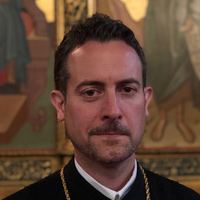 Fr. Joshua Makoul