Made to Be a Kingdom
How God forms us as His sacred royal family
This podcast presents, describes, and demonstrates how “Royal Priesthood” and “Priestly Kingdom” are not simply general niceties, but rather are specific directives from the Lord through His Apostles to the Church.  They describe the specific roles of the faithful from layperson to bishop of the Royal and Priestly duties and roles we are called to fulfill.
Support podcasts like this and more!
Donate Now
Sorted by:

Page
of 26
Friday, March 13, 2026
Fasting as the Body of Christ: The Ecclesial Shape of Great Lent
Great Lent is not a private self-improvement program; it is the Church’s shared praxis of becoming the Body of Christ through fasting, prayer, and worship. Fathers Harry and Anthony connect the “cloud of witnesses” (Hebrews 11–12) to Orthodox intercession, icons, and the liturgical convergence of heaven and earth—then press the pastoral point: let Lent actually re-form your habits, especially your relationship to media, noise, and distraction.
Friday, February 27, 2026
Built on the Anointed Rock: Christ, the Church, and the Gates of Death
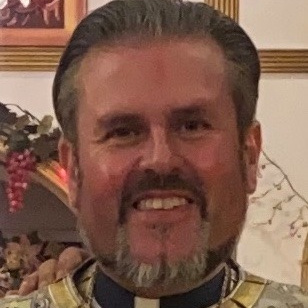
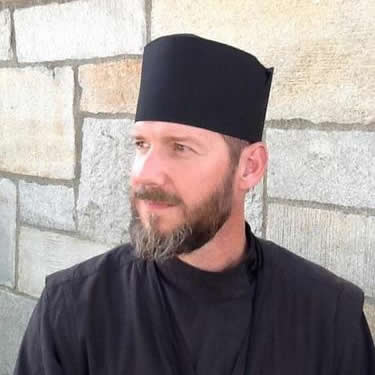
In this episode of Made to be a Kingdom, Fathers Harry Linsenbigler and Anthony Perkins return to Christ’s words in Matthew 16–18 to explore what Scripture reveals about the nature of the Church. Reading the Gospel through its original biblical and Septuagint context, they reflect on Christ as the anointed Petra, the gathering of the scattered people of Israel, and the Church as the place where God restores His flock from among the nations. Drawing on Micah’s prophecy (2:6-13), the language of gates and mountains, and the Paschal victory over death, the conversation shows how Orthodox ecclesiology is rooted not in abstract authority, but in Christ Himself—the Anointed Rock who leads His people through the gates of hell into life. Along the way, they highlight how Scripture interprets Scripture, why the Church understands herself as the restored Israel, and how Pascha stands at the heart of what it means for the Church to be built, gathered, and led by Christ.
Friday, February 20, 2026
Where Is the Church? Matthew 16:18, the Confession of Peter, and Paschal Victory
In this episode, Fr. Harry and Fr. Anthony slow down over Christ’s words in Matthew 16— especially the phrase “my Church”—to clarify that the Church is first Christ’s possession and work, not ours. They trace how Orthodox ecclesiology comes into focus through text and context: Christ’s confession, the meaning of rock (Petros/Petra), and the claim that the Church’s “locus” is the faith revealed by the Father and preserved in the Church. Finally, they bring Caesarea Philippi into view as a charged setting—“the gates of Hades”—so that Christ’s promise reads not as abstract poetry but as a Paschal announcement: hell will not prevail.
Friday, February 13, 2026
Before Pentecost: The Church Older Than the Sun and Moon
Pentecost isn't the Church's birthday: the Church precedes it, stretching back to creation itself, angels, prophets, patriarchs, and is revealed most clearly in Christ and the Church's liturgical witness. Pentecost inaugurates the apostolic priesthood and Eucharistic life, and the episode invites listeners to be formed by the prayers and hymnography where Scripture becomes prayer and grace supplies what is lacking.
Friday, January 30, 2026
Whose Church Is It? Belonging, Not Owning
In this New Year episode, Fr. Harry and Fr. Anthony challenge the casual habit of saying “my church” by reframing ecclesial identity: the Church is of God—not our possession, but the place to which we belong, purchased by Christ’s blood (Acts 20) and built as a household on the apostolic foundation with Christ as cornerstone (Eph. 2:18–20). They trace how the Church’s catholic “wholeness” is Trinitarian—the Body of Christ, the temple of the Holy Spirit, and the people of the Father—made real through baptism, chrismation, and the Eucharist. Along the way, they clarify Christ’s unique mediation (mesitēs), show why the Church can be called “of Christ” without diminishing the Trinity, and close with Theophany’s vivid sacramental imagery—especially the ancient practice of breathing/blowing over the waters as participation, not mere remembrance.
Page
of 26
English Talk
Orthodoxy Live October 15, 2023