
Fr. Evan Armatas: Good evening, and welcome to Orthodoxy Live, your live call-in show about the Orthodox faith, her teachings, and her traditions. I’m your host, Fr. Evan, and we’re streaming to you live here from Ancient Faith Radio. I’m so glad you’re with us this evening. It is October 27, 2019. We look forward to taking your calls this evening, and you can reach us, as our announcer mentioned, at 1-855-AF-RADIO; that’s 1-855-237-2346. You can also get to us at ancientfaith.com by going to the live streaming programming, and you’ll find a way to record on Ancient Faith’s home page. If you look there for live radio, you’ll see the microphone button under Orthodoxy Live, and you can record a question while we’re on air, or if you’re listening to this broadcast as a podcast, you can send in your audio question that way as well. You can also get to us at .(JavaScript must be enabled to view this email address) or at ask—a-s-k to make that easier for you: ask, a-s-k—@ancientfaith.com, so however you’re listening to us.
Well, as I mentioned just a moment ago, we have been on air since November of 2012, which means in just a couple more weeks here we’re going to begin our eighth year of broadcasting here at Ancient Faith Radio, and we’re so very thankful to have spent this much time with you on Sunday evenings, broadcasting live and answering your questions about the Orthodox faith, her teachings, and her traditions. To all of you who’ve listened and supported us over the years, thank you: to the staff back in Chesterton, Indiana, and especially to those of you who have provided material support to help us with our broadcasting. As I said, just this week new equipment was installed here at the studio that I work out of in Ft. Collins, Colorado, which is really just in the basement of my home, and in the—gosh, what is this, I guess—the craft/utility room that has been converted into a studio. Isn’t that amazing that we can broadcast all over the world from, really, the basement of my own home, and through the generosity of the supporters of Ancient Faith Radio and this incredible new technology that we all benefit from.
So I’ve got a new mic, I’ve got a new interface with the studio back in Indiana, a new mixer board, and I hope the sound is better for all of you listeners. Before we get to some more announcements, I want to bring someone on who’s calling from Denver. John, are you there?
John: Yeah, I’m here.
Fr. Evan: Well, John, I have to give kudos out to you because, thanks to your driving up from Denver and spending the day here in the basement of my home, you’ve revamped the studio here on behalf of Ancient Faith, and I’m thankful for that, and I know our listeners are as well. So thanks for coming up.
John: Sure. My pleasure.
Fr. Evan: And we’re very fortunate, John, because you do as in your professional work, working for Colorado Public Radio, but as a faithful Orthodox Christian, you’ve also not only done lots of great work for Ancient Faith Radio, but just on the audio page of my parish where a lot of the podcasts and sermons that are done in the parish are up, and the Bible studies that people listen to here, Transforming our Lives in Christ, I know that you’ve put in countless hours curating and getting that material ready, so thank you.
John: Yeah, it’s been a long project! I think we started that back when you were at St. Catherine’s.
Fr. Evan: Yeah, ‘07—no, before ‘07! What am I saying? 2002 is the first time that we broadcast something, so that’s almost 18 years ago. I think the very first time, John, that we recorded stuff, you handed me a tape recorder, and I remember you said something to the effect of: “Hey, whenever you go someplace and talk, just record it,” and you took those analogue tapes and you converted them to digital. Do you remember doing that?
John: Oh, yeah. We had some conferences at St. Catherine’s, and we had a cassette machine there hooked up to the sound system, so we started recording on that and a few other places. But that quickly went over to digital. That changed pretty quick.
Fr. Evan: Yeah, I mean, I know that one of the classes that people still listen to, the introduction to Christianity, is a class that I recorded using a tape recorder, and you can still get that, now converted into digital files, but you’re right. We did convert fairly quickly over to digital.
But for those of you listening tonight, you’re streaming with us live here at Ancient Faith Radio, and if you’d like to join the program, with a couple of open lines you can do that at 1-855-237-2346; that’s 1-855-AF-RADIO.
Well, John, I know that you were up here and I asked about your dear wife, Pam, and you told me you were doing well. Pam had some questions, and you had one, and maybe you’ll get a call in. I said you should and not only that, but because it gives me an opportunity to thank you on behalf of AFR for your hard work.
John: Sure. I know you can look at the reference material behind you on the shelves. [Laughter]
Fr. Evan: He’s referencing the shelves of LEGOs and puzzles and games that my children have stored behind the studio mic here! I’ll reference those now, especially if your question is a difficult one! [Laughter]
John: Pam was talking about, in her Bible study class, they were talking about the immaculate conception, and you were talking about that here. As a Protestant, growing up Protestant, we always… If I heard that, it meant that Jesus was conceived immaculately, I guess, but then she was saying that, reading about the Roman Catholic Church, they have a whole different meaning on that.
Fr. Evan: Mm-hmm. I think, as you said, if we think about the idea of the immaculate conception, we immediately bring to mind the idea that Christ was born without a human seed but by activity of the Holy Spirit and that his mother, Mary, knew no husband in the physical sense, and conceived without seed, as they say, but rather because of the divine act of the Holy Spirit. So, as you’re right, many Protestants, when they hear the idea of immaculate conception, think that that Catholic doctrine is referring to the birth of Christ. Sometimes even Catholics will confuse that, but obviously the Catholic doctrine of the 1850s [states] that Mary herself was immaculately conceived.
I think that the way that that doctrine is phrased is something to the effect of “by a singular act of grace,” Mary is born outside the race of humankind, and without stain or blemish, and not with the effects of, as they would deem it, original sin. This is problematic for the Orthodox, and it should be problematic for all Orthodox Christians, because we know that the human nature of Christ was received through his mother, Mary; his divine nature comes by act of his incarnation and the uniting of Christ, the incarnate—or I should say the pre-eternal Logos. So the God who existed before time and outside of time and outside of creation enters into creation, uniting his divine nature with human nature. That human nature comes to be united with Christ and is received from his mother.
So the question becomes: if Christ’s nature is received from his mother, and his mother stands outside by a singular act of grace of the human race, then the nature Christ receives is not the same nature as ours. So when we think about Christ’s redemption and his death and resurrection, if Christ redeems a nature other than our own, then we are outside of God’s salvation. So the Orthodox Church rather pointedly says: No, Mary is not outside the human race. Her nature is the same nature as yours and mine. So Christ shares the same exact human nature that you and I have, and this is what he redeems.
So one way that the Catholics would put it is that Mary is the great exception, and we would say, oh, no, no, we don’t like that, but rather she is the great example, standing within the human race. There’s more to it, John. Part of that has to do with the fact that, in some circles within Christianity, you view sin and original sin—a term that the Orthodox do not use, that the ancient Church never used—as something that is inherited through the line of one’s parents. So each human being [is] born guilty of original sin and therefore guilty, as it would be styled in the Western thought, before the throne of God. But, again, this is not how the Church spoke about our ancestral sin, the sin of Adam and Eve. We’re not guilty for Adam’s sin; rather, the Church says we inherit the consequences of Adam’s sin, but not its guilt.
Pretty stark difference, and it all sort of comes to fruition in the way that Catholics talk about the immaculate conception and the way that perhaps a Protestant misunderstands what they’re talking about. It’s a good question, and I don’t know if that makes sense to you, but it probably does, I think at this point, I hope.
John: Yes, it does. One thing that Protestants who’ve kind of pushed Mary aside, kind of remove the connection we have as humans to Christ.
Fr. Evan: Exactly. The thing is, that which is not taken up cannot be saved. That’s an ancient way of looking at it. So we say that everything about our humanity Christ took up, save sin. He did not sin. He is sinless. But otherwise he experienced everything that we experience, and goes through all the stages of human development that we go through. So, yeah, important point you’re making.
John, thanks for calling. It’s good to hear your voice on air.
John: Yeah, to be on air. I’m usually behind it!
Fr. Evan: Yeah, you’re working in the background all the time. Well, tell Pam hi and tell the cats hi, and thanks for all your hard work.
John: A cat was sitting here right next to me.
Fr. Evan: Give her a pet for me. Thanks, John.
John: Okay.
Fr. Evan: Good night.
Again, you’re listening to Orthodoxy Live here on Ancient Faith, and if you’d like to get into the program as John drops off, there are some open lines for you at 1-855-237-2346; that’s 1-855-AF-RADIO.
As we get underway, I mentioned the new equipment, and one of the things I wanted to mention: I got some questions from listeners about how to stream on the AFR app. If you don’t yet have the app, it’s pretty easy to acquire. Go onto whatever app store you use and as you download the Ancient Faith Radio app, one of the things that you’ll notice is, as you open up the app, you’ll see a screen that basically lists AFR music, AFR talk, and Live. If you hit that AF talk button, and go to “Listen Now,” you’ll see a “Listen” button, and you’ll click on that. I say this to those of you who end up listening on your computers or your tablets that maybe are not as mobile, or to those of you who are listening as a podcast but want to listen live. You can do that by just downloading the app. Once you’re listening live, you can drive around and listen to us, you can work out, you can be in the kitchen. You can also, of course, get to us on one of those incredible small devices like an Echo, Dot, and the rest.
We’re going to go back out to the phones. I think we’ve got Kurt with us. Kurt, are you there?
Kurt: Can everyone hear me?
Fr. Evan: Yeah, you’re on air! Hi, Kurt. Where are you calling from?
Kurt: I’m calling from Pennsylvania. I’m an Orthodox Christian. Just a question.
Fr. Evan: Well, welcome! Tell me your question.
Kurt: My question is regarding truth and the nature of truth, especially in a world where there’s so many ideologies, religions… I’ve studied a lot of those different things myself, so I was wondering: What is the Orthodox perspective, I guess you could say, on the nature of truth, and especially with the situation we have today with all the relativism and ideas? I’m just seeing what your perspective on that was, Father.
Fr. Evan: Yeah, Kurt, great question. So: What is truth? That is a question that is found in holy Scripture, in the mouth of Pontius Pilate. Do you remember that question that he asks, “What is truth?”
Kurt: Yes, I do. [Laughter]
Fr. Evan: For our listeners who may not know the Gospel and may not be familiar with the story of Christ, we should probably unpack that a bit for them. We know that at the conclusion of our Lord Jesus Christ’s earthly ministry, he had been arrested at this point and brought before the regional Roman governor, Pontius Pilate, a historical figure, and placed on trial for treason against the state—that was the political charge, but the religious charge was blasphemy from the Jews, but they played a game with his charges with Pontius Pilate. And he has an encounter with Pontius Pilate in which Pontius Pilate famously answers, “What is truth?”
I bring this up because the encounter between Pontius Pilate and Jesus Christ helps the Church answer the very same question you’re asking: What is the Church’s answer to the question: What is truth? Now, I’m giving you this set-up [in which] this question arises when Pontius Pilate and Jesus are in this dialogue. What is the answer, do you think?
Kurt: Well, from what I remember… So I kind of vaguely remember it, but he says basically he is the truth. Is that correct? I said I kind of vaguely remember the story, but I’m not good at the details.
Fr. Evan: No, that’s a good question. The story is found in John 18. Basically, the answer to the question, What is the truth, is Christ. That what’s ironic in the encounter between Pilate and Jesus is that Pilate is facing, face-to-face with, the literal incarnation of the Truth (capital T, capital T). And his question, What is truth, on the one hand is one that many of us in the world who are without Christ continue to ask: What is truth? And we search for it in all sorts of things, but the Church proclaims that Truth is Jesus Christ.
Now, that may for some seem a bit abstract, that truth is this sort of abstract thing, and that’s exactly what Christ is pushing up against. No, Truth is him. And the quotation that you’re bringing up comes earlier in the Gospel, when Jesus Christ is speaking to Lazarus’ sisters, so in the encounter that Christ has earlier in the Gospel of John with the two sisters of Lazarus who have lost their brother and wonder if their friend—and they’re thinking but they’re not certain yet, that if their friend who is also the Messiah, Jesus had been with them, then their brother Lazarus would not have died. And Christ asks his friends if they believe in the resurrection. Again, for Lazarus’ sisters, the resurrection is conceptual, just like this question, What is truth, is in some ways an utterance conceptual, and Jesus Christ says, “But I am the Resurrection, I am the Way, I am the Truth, and I am the Life.”
So he says, “All of those things that you are looking for as ideas are found in me as a Person.” This is a radical understanding of truth, because philosophers—and I was a philosophy major—we chase truth as if it was a math problem. We chase truth as if it was a logic problem. We chase truth as if it was an agreement of terms and definitions and arguments, and all of that is dispelled. I think we can relate to this, Kurt; we can relate to this because when we meet someone, that experience—I mean, what is more powerful than meeting, perhaps, our best friend or our spouse, or encountering our own child. Nothing is more world-turning than another person. Nothing can upset, in a positive way, our perspective like a person, you see.
In this sense, this is how the Church answers what truth is. It’s Jesus Christ. Then we can say, in a very practical sense, what did the person Jesus Christ do and preach? Here we start to see an integrity to his preaching, his teaching, and his life that is not found in any other person in history. Right?
Kurt: Right.
Fr. Evan: I don’t know if you’ve ever thought of it that way.
Kurt: Not really, I’ll be honest with you. I tend to think of faith and God or just kind of religious studies as kind of an idea or a concept, intellectual exercise that you process. I read theology, I’ve read philosophy books a lot over the years, and that’s been my way of thinking about it. Okay, if I can give this rational argument that this and this proves the existence of God or this thing is true, then that’s how I will know or can make a proof or a reason for religious faith, like you said.
That’s always been the way I’ve thought about it, so what you’re presenting as truth definitely gives a different, and I’ll be honest, a kind of uncomfortable picture of what it is, or rather who, from what you’re saying, because that means letting go of this idea that you can just grasp it from an intellectual side.
Fr. Evan: Right.
Kurt: It definitely means some humility, I guess you could say, some willingness to put that trust into the relationship of….
Fr. Evan: Yeah! You know, you can approach this, Kurt, from just your head, your brain, and certainly the Church does that, but I want to challenge you with a thought. Is it true that the souls of the righteous, once they have departed this life, are still in relationship with God?
Kurt: Oh, we as Orthodox Christians believe that, yeah.
Fr. Evan: Yeah, but do those who have passed in this life—in other words, they’ve died and been buried—do they have a brain any longer?
Kurt: Well, not in the physical sense.
Fr. Evan: Right, so what is the faculty that is in relationship with God and comprehends and interacts with God when it is no longer based on the synapses located in your neurons at the top of your shoulders?
Kurt: I honestly never even thought about that. [Laughter]
Fr. Evan: Right, most haven’t. When we think of an angel, an angel doesn’t have a brain, but it has an “intellect”; it has noetic powers. How is it that it knows God? How is it that it interacts with God? How is it that it speaks to the truth? Well, it doesn’t do so in this logician’s puzzle. It doesn’t use “logic” as we would know it, but rather it uses something super sensual, beyond the rational. What we can apprehend in this is really the experience we have when we fall in love. It’s beyond comprehension. It’s super-, supra-, beyond.
When my mother jokingly—I tell this story—she would say, “I just don’t understand why you hang out with that Scott character,” who was my best friend growing up. “It’s not logical.” And it wasn’t. It didn’t need to be. When we think about Christ, the Truth, our interrelationship with him is based on the personal experience, and that is the truth. When we come to believe in the resurrection, it’s not a concept, but it is the Person, Christ, who rose from the dead. When we believe in his promises, it’s because he made a promise to us and he is trustworthy. It’s not because it’s written down in some way that we cannot refute, although those things are helpful.
Yeah, they can, but what you’ve asked is seriously just one of the greatest questions, and its answer and the examination of its answer is something to really think over.
Kurt: Mm-hmm, it sure is. It sure is. It puts a different perspective on it for me. I’ll have to really think about it.
Fr. Evan: Definitely. Well, thanks for listening, Kurt. Thanks for calling. I hope to hear from you again. Great question.
Kurt: Thank you, Father.
Fr. Evan: You bet.
Kurt: Thank you. Thank you.
Fr. Evan: Well, as Kurt drops off, again that opens up a line for you. If you’d like to get in tonight’s program here on Orthodoxy Live, you can dial in at 1-855-237-2346; that’s 1-855-AF-RADIO.
A couple of other things before we get out to our next caller. This next week I’m travelling off, God willing, to Chicago to the parish of St. Haralambos—that’s a difficult word for us to say in English, but an early first-century saint of the Church, a priest-martyr—and also the parish is known as Holy Archangels, or Taxiarchai in Greek, in Niles, Illinois, and I’ll be speaking this Wednesday evening, so if you’re in the Chicago metro area and you’d like to come out and join me in an evening of conversation about the Orthodox faith, that will be this coming Wednesday evening in Niles, Illinois, at the parish of St. Haralambos and Taxiarchai. You can Google that parish and call in and make a reservation, but if you don’t get a chance to RSVP, no problem; just show up. We’ve got details up on our Facebook page as well.
The following week I’m off to Boston to offer a lecture on Church culture and strategy at Holy Cross Greek Orthodox Seminary/Hellenic College in Brookline, Massachusetts, on November 6, and again, if you’d like to join us, that’s something you can do in the Bishop Iakovos Reading Room there on campus on November 6 in the evening. I hope to see you out there as well.
Don’t forget to check out the new specials in the specials section on Ancient Faith Radio called Saving Relationships. I think you’ll enjoy that podcast on the theology of person and relationships that’s available to you.
Again, as you’re listening tonight if you want to get into the program you can dial in at 1-855-237-2346, 1-855-AF-RADIO. You can also get to us at .(JavaScript must be enabled to view this email address). And once again we’re going out to the phones. Greg, are you there?
Greg: Yes.
Fr. Evan: Welcome, Greg. Where are you calling from?
Greg: Houston, Texas.
Fr. Evan: Wonderful. You know, Houston’s an awfully big city. What is it, second- or third-largest now in the US, what is it?
Greg: I believe it’s the third-largest in the US. It may have fallen to fourth, but they keep incorporating. They have a law here where anything connected to the water they can incorporate, so, for instance, NASA originally wasn’t part of Houston; it was a place called Seabrook, and they said, “Well, we’re not going to let NASA take the thunder from Houston,” so they incorporated it.
Fr. Evan: Oh, for real! I didn’t know that. Are you a native?
Greg: No, I’m new to the area, but I was very fascinated by where I’m at, and the weather is great. I’m from Detroit originally, so the weather: it’s always a tropical paradise. [Laughter]
Fr. Evan: Yeah, I mean, Detroit is not known for its weather, is it?
Greg: No.
Fr. Evan: I have to say, just down the block from me in my neighborhood are a couple of parishioners, and they originally hail—well, the husband does—from Detroit. He enjoyed, of course, growing up there. He loves Michigan, but he’ll tell me all the time: Gosh, you don’t enjoy the weather in Michigan. That’s not a slight against the wonderful state and the people of Michigan, but a lot of gray skies and pretty cold winters.
Greg: Yeah, I guess if you’re into winter sports, snowmobiling, skating, and hockey, it’s a great place.
Fr. Evan: So down in Houston now. Do you have a parish that you attend in the Houston area?
Greg: Holy Protection of the Mother of God Orthodox Romanian Mission.
Fr. Evan: Wow, okay, I don’t know about that church.
Greg: It’s kind of new. About two years ago, all they had was a large trailer and a muddy field. Now they’re slowly building a church and putting additions on as they go.
Fr. Evan: That’s great. Holy Protection of the Mother of God, Houston, Texas.
Greg: Fr. Julian.
Fr. Evan: Fr. Julian… Wow. I’ve not heard of this church. So it’s in Beechnut Crossing?
Greg: It’s on Beechnut Street.
Fr. Evan: Oh, Beechnut Street. Okay, thank you.
Greg: It’s in Houston.
Fr. Evan: So people can Google this and make their way to your website. Is it an ethnically Romanian parish?
Greg: There’s probably half the people are ethnically Romanian, but the other half are converts.
Fr. Evan: So services are in both languages?
Greg: It wasn’t like the Greek church where I went where all they talked about was the Greek festival.
Fr. Evan: Thank God. Hopefully we’re just basically talking about the Gospel. That’s what we need to be talking about. I appreciate your telling us about the church. So visitors are welcome, I would assume.
Greg: Yeah. The website is theholyprotection—let me make sure this is the right website—theholyprotection.org.
Fr. Evan: Theholyprotection.org. Yeah, I just brought that up and I can see your building and how wonderful… Please greet your priest for us, and may God continue to guide and bless this new community. How wonderful. I’m glad to hear of it. So tell me your question.
Greg: I had a… It’s kind of an unusual question. I heard a song by this secular singer, Tom Waits, called “Time,” where he has a literary character that sounds like an angel of death or grim reaper, but then I started thinking… I’ve also seen the TV series Touched by an Angel a few years ago, and I know that was founded by Mormons or they were kind of behind the series. But I guess I’m curious: Do the Orthodox believe angels intercede in the lives of humans, or is it just the Holy Spirit, and/or does the Orthodox Church have anything like the angel of death or guardian angels that swoop down and say, “It isn’t your time yet”?
Fr. Evan: Good questions. Well, let’s back up, because when we talk about angels, we have to define what we’re talking about a little bit. Within the Christian perspective, the Gospel of Jesus Christ, and holy Scripture, angels are well attested to throughout holy Scripture. Whether it is in the Old Testament or the New, we see that angels are constantly mentioned. From everything to the throne of God and those angels who accompany God in the heavens, and a lot of these angels are given specific names—thrones, principalities, dominions, the many-eyed cherubim, and seraphim—to the idea of the archangels—and we know some of their names: Gabriel, Michael, Raphael—these are names in Scripture of archangels.
We see these same angels active, especially in the New Testament in the visitation of Mary with Gabriel and Joseph. We know that the idea and the concept of a guardian angel, an angel assigned to every human being, is also attested to in holy Scripture. There’s an encounter that Peter, after he escapes from prison, makes his way back to the house-church, and the servant going to the door sees Peter at the door but mistakes him for Peter’s angel, assumes it’s his angel that has come to the door. So there’s this sense within holy Scripture that our guardian angels are deeply connected with us—I don’t want to say visually in that sense. I mean, I think this was a beyond-rational experience where she thought that she was beholding the angel of Peter, Peter’s guardian angel. So certainly angels and the angelic powers are well-attested to in holy Scripture.
Within the worship of the Church, we have not only mention of the angels throughout our worship services, but we also depict the angelic order within our art. Many people have probably seen this throughout, let’s say, the study of Christian history, that the angelic powers are depicted in frescoes and icons, and in the West even in statues. But in the Orthodox tradition, it’s very traditional to have the angels depicted in a very specific theological way within the church, in icons upon the walls of the church. There’s a sense that, whenever the Church militant, those of us on earth worshiping God, gathers, it is joined by the incorporeal powers, the angels, those without a body, who also worship God, so that both the corporeal and incorporeal powers—the bodiless and the embodied powers, human beings—gather and worship. There’s specific prayers that are read at the small entrance. There’s even hymns: the hymn “Holy, holy, holy…” is a hymn that the Church says is the hymn of the angels, sung at the altar and throne of God.
Angels are all over Scripture, they’re all over worship, they’re in our art, and so we would say that the Orthodox Church gives witness to this spiritual reality. We even have feast days that we set aside to commemorate the archangels and the bodiless hosts. I mentioned I’m going to Niles, Illinois, this coming Wednesday, and I’ll be speaking at the parish there. The parish is named Holy Archangels. So it’s named to commemorate the archangels that serve God.
Now, you asked: Do angels intercede and does the Church believe in an “angel of death”? Well, in the book of Isaiah, we know that Isaiah tells of the falling of Lucifer, if you will, the most beautiful of the bodiless powers, who, if you read the account—and most recently in my Bible study that’s found on Ancient Faith Radio called Transforming our Lives in Christ, we talk about Lucifer’s fall as it relates to the temptation of Christ in Luke 4. We look back in Isaiah, and we look at Lucifer’s fall. So Lucifer, in many people’s minds, is also associated with this sort of idea of the angel of death and the contrary powers. So we also believe that there is a set of bodiless powers that is demonic, the demons, led by Satan. These bodiless powers are arrayed against God. So we see this. A couple of weeks ago we were reading about the Gadarene demoniac, and he was inhabited by a legion of demons, and Christ cast them out. These demonic powers recognized Christ, and they’ve inhabited the man to torment him, and Christ sets a boundary to their power, and he excises them and exorcises them from humanity. That’s what God does: he pushes the dark and evil powers away from his creation.
This leads to the second part, which is: What is an angel’s purpose, what’s a demon’s purpose, and how do they interact with humanity? Well, the word “angel” means messenger, so the first thing we would say is that the angels are the messengers of God. They bring the message of salvation; they assist in the message of salvation. And the demons do the opposite. They attempt to bring us to stumbling, to sin, to disfigurement, to a prideful disposition of going about life without God; [that] is their intent. The two sides are arrayed against each other, and they serve cross purposes: one to enslave, the demonic, and one to liberate, the angelic.
God doesn’t need either the angels nor the demons, but rather God, being supreme, all-knowing, all-powerful, can operate without angels and demons and human beings and the earth and the universe, but the real question is: Has he chosen to include the angelic powers in his ministry? And the reality is: yes. Greg, when we say that the Archangel Gabriel, as recounted in the Gospel of Luke, visits a young woman, Mary, he does so to pass along a message from God, and interacts with Mary. When we consider our own guardian angel and their intercessions—and we have prayers to one’s guardian angel—they advocate for us and are supportive of our life in Christ. So they’re not just simple bystanders. They’re not just sort of throw-away spiritual powers that are neutral. They have, if you will, bound themselves to the service of God and work alongside God for the salvation of the human race. That’s what’s so staggering to those of us who consider how much God has attempted to assist us in the perfection of our souls and in the healing of our disfigured lives.
Okay, that was a long answer to your question, but did I cover your questions or are we missing any parts?
Greg: I think so, yeah. I’ve also… There was some simulation somewhere—it may not have been Orthodox—that the Protestant Bible, they purposely tried to de-emphasize angels, and they moved… I know that some of the Old Testament books, they threw out featured angels like Tobit.
Fr. Evan: Enoch, right, Wisdom of Sirach. Well, it’s possible that as we move through Church history and the West begins to emphasize more the rational and logical nature of faith—and this is seen in the idea that one is not admitted to baptism until the age of reason, or they’re not given a communion in the Catholic Church until the “age of reason,” and they can go through a catechism—is the idea of sort of putting aside the supernatural and the miraculous and the charismatic, and then we have a reaction against that in our own country, in America, with the sort of charismatic movement and the gifts of the Spirit. All of this, in a sense, is really kind of begging the question of: Did something get lost? And the Orthodox Church would say yeah, quite simply, we believe that there are angels, bodiless powers, created by God, who work with and are bound to God’s will and to the salvation of creation. To ignore the angelic reality, the angelic powers, is to ignore part of God’s plan.
So, simply, in the Orthodox Church we have from the time of Christ till now have honored them and rightly placed… Now, you can go too far. You can set up an altar to Michael, and you can come to worship them and you can come to see them as your savior—and all of that is wrong. And you can do the opposite, with the demonic, and you can serve it. And you can also ignore the demonic; just as you can ignore the angelic, you can ignore that there’s evil and there’s an evil power. That question comes up all the time to me: Is there really evil? Is there really a force working against God? The Church certainly says so, and the Scripture attests to it, so we would do well to recognize both the influence of good and to serve it, and to avoid the influence of evil and to turn our back against it, which we do in the baptismal service. We cast it out, we spit on it, and then we turn our back to it. That’s the liturgical action in the service of baptism.
Greg: Okay. So we could possibly encounter an angel that seems a human, or appears to be in human form.
Fr. Evan: Yeah, and Scripture tells us to test that, and certainly we don’t believe that the angelic powers nor the demonic have ceased working, and we certainly… Again, how we apprehend that, just as I was answering Kurt’s question, I said the recognition of these spiritual powers may not simply occur with your physical eyes and the gray matter. Just as we cover the Eucharist from your sight because it’s not simply to be understood rationally—how do you understand bread and wine to be Body and Blood? Well, it says it clearly in Scripture, in 1 Corinthians 10:16, and Paul is taking the theology of our Lord from John 6, and of course all the accounts of the Last Supper or the Mystical Supper in the synoptic gospels. But you receive the Eucharist as the Body and Blood of Christ, but it is also bread and wine. Now, how is it both? Well, the Church says this is not, again, something that we understand with our rational mind. We do our best, but it is beyond that, just as we would apprehend the visitation of an angelic or a demonic power.
Greg, thanks for calling. Great to have you on the program.
Greg: Thank you.
Fr. Evan: You bet. All right. Take care.
Greg: Bye.
Fr. Evan: Good night. Again, you’re listening to Orthodoxy Live. As Greg drops off, there is an open line at 1-855-237-2346. We’re going to go out to Joe. Joe, welcome to the program. Joe, are you there? Did we lose you?
Layton: This is actually Layton. Joe is my husband, but…
Fr. Evan: Ah, sorry. Gotcha. See, on the… I’ve got this little board. It’s brand-new to me, because I’ve got this new equipment, and it shows up as “Joe,” and then it gives a last name and a number. But I get it: it’s just picking up the caller ID. Well, Layton, welcome to the program. Nice to have you on.
Layton: Thank you. Nice to meet you.
Fr. Evan: So where are you calling from, Layton?
Layton: I’m calling from Hendersonville, North Carolina.
Fr. Evan: Okay, now you’ve got to do a little geography for me, because I don’t know where Hendersonville is.
Layton: Hendersonville is near Asheville in western North Carolina.
Fr. Evan: Oh, I’ve heard such good things about that part of the country. I’ve heard it’s just startlingly beautiful.
Layton: It definitely is, especially this time of year.
Fr. Evan: Yeah, you’ve got a bunch of reds and oranges and yellows.
Layton: Yeah, we’re starting to get that. It’s been kind of a late fall for us this time. It’s finally starting to get a little chilly.
Fr. Evan: Can I tell you—you’re going to think this is shocking—yesterday the high here in Ft. Collins was 71°, and currently it’s 19 and snowing. So we had a few leaves still left, and then it just flipped on us. It’s supposed to be snowing all week. We’re supposed to be getting a foot of snow this week. Can you believe that!
Layton: Wow.
Fr. Evan: Yeah, but then it’ll be mid-50s by weekend and the sun out, and everything will dry up. And you have yet to have the leaves turn?
Layton: Well, they’re just starting to turn the last week or so.
Fr. Evan: Isn’t it amazing? God’s creation, just how different things can be, and the topography and the weather. It’s just amazing to consider.
Layton, where is your home parish out there in Hendersonville, North Carolina?
Layton: We actually just planted a church. It’s a Carpatho-Rusyn church, and we are meeting in a temporary building.
Fr. Evan: No way!
Layton: Yeah, at Mills River Presbyterian Church, so we’re kind of a very small church plant right now. We’re busy, because we’re a mission, so we’re just trying to get started.
Fr. Evan: So if someone wants to join in in the mission and be part of that community, how would they get to you? How would they find you?
Layton: Well, we have a website, and we’re trying to do some outreach. We’re building connections in the community, and that’s part of what we’re working on. Our name is St. Anthony the Great.
Fr. Evan: St. Anthony the Great in Hendersonville, North Carolina, or in Mills… Which one should I look up?
Layton: We meet in Mills River.
Fr. Evan: So you meet in Mills River, but people can find you by Googling that. Wonderful. Do you meet every Sunday?
Layton: We meet every Sunday, and right now we’re having the meet in the afternoon, because we’re meeting in a Presbyterian church, so we meet at three o’clock, which is kind of a challenge, but…
Fr. Evan: I understand. I’ve been part of two church plants in my life. Well, I should say I take that back: I’ve been involved in three church plants in my life. I’ve been fortunate in each of those—well, no, in two of those—that we could meet at a standard time, and in one of them we had to adjust, because we were using space that was used by an Anglican community, and we were their guests. I understand all of those challenges and certainly being part of a church plant here in northern Colorado.
Today, it was kind of a beautiful thing. I had a guest with me, Fr. Apostolos Hill, from Holy Trinity Cathedral in Phoenix, Arizona. It was myself and Fr. Apostolos and our two deacons, Dn. Mark and Dn. Eugene, and our sexton, Mr. Darrell, or Seraphim, he does such a beautiful job caring for our church along with his altar team, and we had everything set up for the liturgy, and on the altar table we had our communion cloth, and because it was a Liturgy we had our communion spoons, and there was four communion spoons. He came up and he leaned over and he whispered to me, “Father, we’re not a mission parish any more, when you’re offering four chalices on a Sunday.” [Laughter] Yeah, I’ve gone through those stages, but nonetheless, welcome to the program. It’s nice to meet you. I’m glad to hear of this new community. God’s blessings. Please call in again and let us know how you’re doing—and tell us your question tonight!
Layton: Yes, my question is: I, it seems like a lot of people who call in on this show, grew up in a Protestant church. I’m just sometimes navigating the challenges of… There’s a bit of a tension between the cradle Orthodox and people who are converts. Of course, a lot of it probably isn’t even intentional, but even just the comments of, “Oh, that’s so Protestant.” For example, we were having a conversation about tithing. I was told, “Oh, that’s Protestant.”
Fr. Evan: I don’t think so.
Layton: I was all: I thought that was biblical.
Fr. Evan: Right.
Layton: Yeah, so I’m just curious on your thoughts on navigating those challenges.
Fr. Evan: Yeah. Well, to some of our listeners, this concept that there is a clash within the Church between those who have joined recently and those already there shouldn’t come as any big surprise. We find the same thing occurring in the New Testament, when you have a predominantly Jewish, now converted to Christian, community accepting now non-Jews into their midst, who are Gentiles. One of the things that they want to do is that there’s a movement within—and it’s not everyone within that Jewish Christian context—they want them to accept being Jewish. Even people like St. Peter and others are struggling with this question, and St. Paul himself, with his disciples Mark and Timothy and Titus and Barnabas: there’s a struggle, and there’s a confrontation, and the conclusion is reached that one must not become a Jew in order to become a Christian, but that certain elements of the Old Testament covenant should be kept.
Layton: Correct.
Fr. Evan: You remember there’s that great council, even called, and they sent out a letter, and they say: Okay, inasmuch as it seemed good to us and the Holy Spirit, here’s what we think you should do moving forward to settle this question. I think something akin to that is occurring, especially now, in countries like America, Canada, Australia, England, many countries in Western Europe and Central America, where Orthodoxy is not native but has come and is now seeing those from outside the Church come in, and those who’ve been in the Church are saying the same types of things: You need to be Greek, you need to be Romanian, you need to be Russian, Serbian, or whatever sub-class of idea, whatever sub-cultural idea. This is one of the reasons why, in a week—not this week but the following—I’m going to go speak at the seminary about culture, because we can have a culture that is fearful, is polemical, that states things like, “Well, to tithe, to preach, and evangelize is ‘Protestant.’ ” To be honest with you, if we step back, we’d say, “No, it isn’t Protestant. It isn’t ‘Orthodox’; it isn’t ‘Catholic’ to do X, Y, or Z. It’s simply the Gospel.” Right?
Layton: Right.
Fr. Evan: So having a focus on the essentials—in other words, to say, “No, we give sacrificially of ourselves to Christ and the Gospel,” this is what the faith has taught, and not allowing the specific to hold sway. Now, I want to say more about this, Layton, because what you’ve asked is a very complicated question, and I want people to bear with me. When we talk about things like tithing, and someone reacts negatively to it, and they say, “Well, that’s Protestant,” I think everybody’s going to take a deep breath, because to call giving a pejorative, put it in a pejorative term, or a contextual term that is negative, that’s other than what we do, is dangerous. At the same time, to force a term upon the Church that she’s not used is also dangerous. So it would be better to get to the essential and say… Are you hearing me so far?
Layton: Mm-hmm.
Fr. Evan: To give sacrificially to Christ and the Church and those who are poor and in need is the Gospel. Can we agree?
Layton: Mm-hmm.
Fr. Evan: But when we use the term “tithe” to a Protestant—which is a very positive term—it can mean something very specific. And to someone who’s Orthodox, it could be a term that literally has no history or meaning. And so you end up in this false argument, and you say, “Well that’s Protestant,” and then you say, “Well, no, it’s the Gospel.” And the truth is you’re both saying the same thing, which is to give sacrificially is the Gospel. So I think sometimes it’s a matter of laying down terms, and what I mean by that is setting them aside. So try that. Say, “We’re not going to talk about tithing, we’re not going to talk about evangelization or prosyletization. We’re going to talk about sharing the Gospel. We want people to know about Jesus Christ.”
On the other hand, when we end up in these arguments or disagreements within the body, I hope people will take them in a positive way. What I mean by it is this: if we can enter into that dialogue and try to discover what the other side is saying, then this will lead to a deepening of relationships within our communities. So if you still use the term “tithe,” and one side reacts against it, I think the wise thing to do is to say, respectfully, curiously, openly, and accountably, “What about that term sets you off?” And they say, “Well, it’s Protestant.” And you say, “Okay. How is it Protestant? What does that mean to you? What does that word mean?” And what they might be saying is, “I’m afraid that we’re going to lose what is essential to being Orthodox, and this idea is going to hold sway in the Church and it never has before.” Then you can say, “Oh! No, no, no. I want to be Orthodox, and I want us to give sacrificially.” “Oh, okay.” You see what I mean? That could lead to a dialogue that I think would be fruitful.
At the same time, I think we have to recognize that, on both sides, both those coming into the Church and those in the Church, space has to be made for each. I’ll give you a visual. My grandmother had a large family and would always invite lots of guests to whatever meals and parties she was throwing. She would just add in an ad hoc manner another table to the dining table so that it just became this very eclectic, long table that would twist around the dining room and into the family room and back into the kitchen. She lived in a smaller home. And the silverware was mismatched and the plates were different and the glassware wasn’t the same. But she always made space for everyone. So the Orthodox who’ve been in the home need to make space for those who have just come, and those who come need to recognize that those who’ve been there also have their place. I think both sides also have to recognize that nobody has the right to lord it over the other, that both sit side by side and both have valuable things to bring to the table.
Sometimes those new feel very timid, like “I don’t want to push and be brash and attempt to…” Well, obviously emotional intelligence kind of guides you in that: just show up and start bossing everybody around. On the flip side, sometimes the Orthodox can be very hard on their new family members, and they can demand things of them that they wouldn’t demand of “one of their own.” So a spirit of hospitality is what I’m pushing towards, a spirit of mutual service and love. I think in a new community this especially comes to the fore. It’s happened in my community, and different groups feel like they’re being either elevated or diminished, and how careful the pastor has to be! I had people asking me, “Father, I want you to tell me how much time you spend with new people and how much time you spend with the originals.” [Laughter] I was like: “Ah, that’s an interesting question.” As my grandma used to say, “I have six children. Ask me which one I love the most.” She’d say, “I can’t tell you that. I love them all, as much but differently.” You see?
Layton, to be honest with you, I wish we could keep going. We’re way past our time. I’d like for you to call in again, because I want to keep talking about this. Maybe you can think over what I’ve said and come back with some more questions, because I think you’ve touched upon something that really needs some more discussion, and lots of communities are starting to face this. So I want to talk about it some more with you. Okay?
Layton: That sounds great. My priest, Fr. Photios, says hello, by the way.
Fr. Evan: Oh! Well, give him a hello back. I’m so glad that he said hello. God’s blessings be with you guys in your new community. I’m so excited that that’s started. I look forward to talking to you again soon.
Layton: Okay. Thank you so much.
Fr. Evan: Good night, Layton.
Layton: Good night.
Fr. Evan: Well, you’ve been listening to Orthodoxy Live here at Ancient Faith Radio, and I was hoping to get some of the email questions in, but our phone lines just kept going tonight, so we didn’t get a chance to do that. But we’ll be back on next week, and as I said I’ll be travelling this week to Chicago, so your prayers for safe travel would be appreciated. Please come out and see us at the parish of St. Haralambos – Taxiarchai in Niles, Illinois. No need to make a reservation; if you don’t get a chance to, just show up on Wednesday evening and join our conversation about the Orthodox faith.
Well, we’ll be back as I said next week on air, and you can listen to all the wonderful programming that’s available here on Ancient Faith Radio. I hope that you do, hope that you’ve downloaded the app, hope that you also have found a couple podcasts to stream with you while you’re driving around. Thanks to all those in the studio who’ve made tonight’s live programming possible and to all of the listeners who support us by visiting the store or making an ongoing donation. It’s much appreciated, and it’s changed tonight’s broadcast, I can tell you that much, with a new mic, a new laptop, and a new mixer board. We really appreciate your support. For Ancient Faith Radio and Orthodoxy Live, I’m Fr. Evan. Good night and God bless!
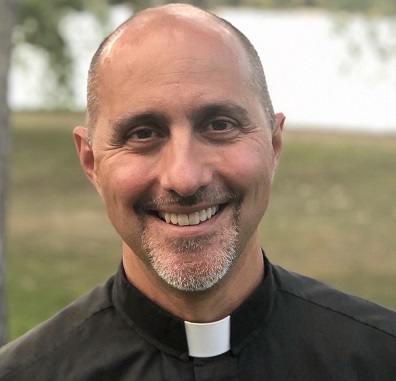 Fr. Evan Armatas