
We celebrate today the life of St James the Just, first bishop of Jerusalem and probable author of the Epistle of James in the New Testament. In preparing this sermon, I was surprised to discover in Galatians, chapter 2, that St Paul called St James “one of the three pillars” of the Early Church, along with Saints Peter and John the Theologian. Now St Peter and St John are well known, but St James is not so well known. So what did James the Just do that made him such a pillar of the Church? Quite a lot!
The Apostle James was chosen by the Apostles to be first head of the Church in Jerusalem. He was the leader of the Council in Jerusalem that took place around the year 50 A.D. that heard Paul and Barnabas speak about their work inviting Gentiles into the newly formed Church. Acts 15 tells the story and I quote: “After they had stopped speaking, James answered, saying, ‘Brethren, listen to me;’” and James then cited the prophet Amos, chapter 9, verse 12, interpreting it to mean that “the rest of mankind”—that is, those who were not Jewish—“may seek the Lord” and that, like the Jews, they “are called by My Name.” Therefore, St James set out certain regulations that Gentiles were to observe such as being faithful to their partners in marriage and not eating meat that had been offered to idols. James then issued his judgement, and I quote: “It is my judgement that we not trouble those who are turning to the Lord from among the Gentiles.” In other words, welcome non-Jews into the Church NOW. James made it possible for those whose who were not Jews to become equal members with Jews of the Church founded by Our Lord Jesus Christ.
So why was St James chosen to be the leader—the first bishop—of the most important church in those early times, who gave the key judgement at the Council of Jerusalem that made it possible for the Church to grow from a small group of Jews into the universal Church that welcomed all of humanity? Let’s see if we can understand today: Who was St James the Just? Why was he so important in Jerusalem? Why is he still important for us?
St James the Just was clearly related to Jesus Christ and was widely known as “a brother of the Lord.” The precise relationship is not clear. James may have been a cousin of Jesus, but was probably the step-brother of Jesus, a son of Joseph by an earlier marriage, before Joseph as an elderly man was entrusted with the care of Holy Mary. Throughout his life, St James was an ascetic—that is, he did not seek his own comfort or pleasure—and he prayed a great deal. One of the early Church historians, Eusebius, recorded that James the Just “went alone into the Temple and prayed [on] behalf of the people . . . so much that his knees were reputed to have acquired the hardness of camels’ knees.” That is a lot of prayer on your knees.
A twentieth century Orthodox layman, Tito Colliander, has written a beautiful book about what is means to be an ascetic person committed to prayer. In Way of the Ascetics: The Ancient Tradition of Discipline and Inner Growth, Colliander quotes the Epistle of James, chapter 4, verse 8: “Draw near to God and He will draw near to you.” For Tito Colliander and for us—and I quote from Way of the Ascetics:
The person who wants sunshine and air opens the window. It would be folly to sit behind drawn curtains and say: There is no light; there isn’t a breath of air! Let this picture show you how prayer works. God’s power, or grace [His blessing] is always and everywhere [available] to all, but one cannot get one’s share of it without wanting it and acting accordingly. Prayer is action; (writes Tito Colliander) to pray is to be highly effective. For every kind of effectiveness needs practice. It is by speaking a foreign language that one learns it, and by praying one learns to pray. Without prayer you can never expect to find what you are seeking. Prayer is the beginning and the basis of all striving towards God. The first gleam of light is lit by prayer; prayer gives the first hints of what you are seeking, and it awakens and sustains the desire to go further.
James the Just was important for the Apostles, for the early Church and for us primarily because he prayed so much. From that prayer, he received great wisdom, great ability to follow the Lord and to lead others to the Lord. St Paul was especially grateful that James had offered to him and to Barnabas—and I quote from Galatians 2:9—“the right hand of fellowship.” When we offer someone the right hand of fellowship, we are saying to that person, “we agree to worship and serve God with you.” Let us do that now: Let all of us—children, teenagers and adults—turn to someone near us and shake hands with them and offer to worship with them today. Then Father Gregory will speak to us about how our worship and service of the Lord here at St Aidan’s has grown during the past twenty years.
Thank you, Father.
20 years ago, when I had more hair and it was less grey, a small group of no more than 20 people dug deep into their pockets and savings. In just 10 days they raised £12,000 to go towards buying this building and a further £10,000 or more over the following six months to put it into a reasonable state of repair. The rest was borrowed from the bank. It was Dwynwen here who had spotted the advertisement of sale in the classified section of the Manchester Evening News. By faith and with prayer and fasting, that very small group of people made all that you see around you here today possible.
Since then, by God’s grace, we have grown and grown and grown. We have grown not only by serving those who came to us already Orthodox, but also with others who have single-mindedly sought out the fullness of Christian faith and life in this Church, the Church. Their faith and sacrifice, added to that with which we started, has been the spiritual engine in the Holy Spirit by which this growth has been sustained.
So, here we all are 20 years on, “busting at the seams,” and wondering if the Lord is calling on us to open a new church somewhere else in this great city, perhaps in the north of Manchester. Who knows? Anyway, today, we have not only a great celebration but also a huge debt of gratitude to God for His love, His mercy and His gracious provision. Just like our forefather and bishop of Jerusalem, we began a grand project with next to nothing and, like him, we now extend our prayer to God that He will build His Church here and in other places well into the future; so may it please Him.
Remember though, please, that our Lord needs labourers for the harvest. Without you. your sacrifice and prayer this vision will perish. Maybe the Lord is calling you to be an evangelist, an intercessor, a pastoral helper, an administrator, a singer, a teacher of children, a server, a hospitality servant, a greeter, a doorperson, a worker of good deeds in the community; the list is endless and on that list the Lord has something for you. Goodness gentlemen, he may even be calling you to be a priest! Do not resist God. Do not quench the Holy Spirit. Rather, say with the Panagia, Our Lady – “Let it be unto me according to Thy Word.” Amen!
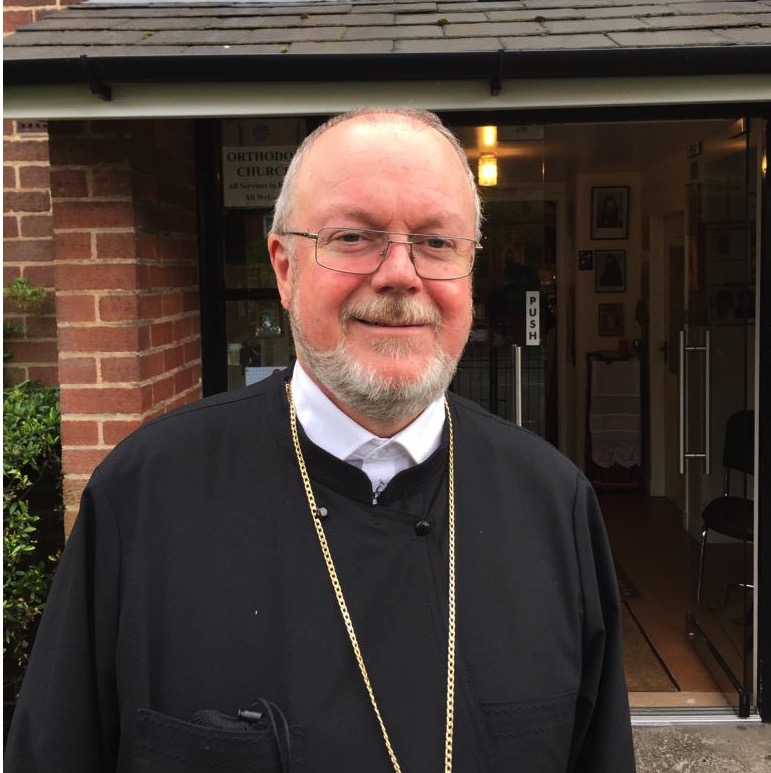 Archpriest Gregory Hallam
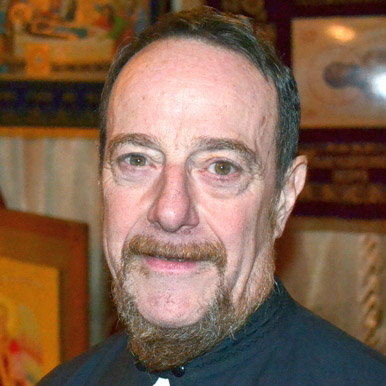 Fr. Emmanuel Kahn