
We all need sleep, a good sleep. Such sleep makes us both rested and strong for the next day. However, there are two other kinds of sleep and these both concern our spiritual state, the first good, the second not so good; in fact, bad, very bad. Let us leave this bad form of sleep until the end and deal for now with that good form of sleep which has a spiritual meaning. Today’s Gospel account of the raising of Jairus’ daughter tells us a lot about this good form of sleep. You will recall that the little girl had died and everyone knew that she was dead, including Jesus. However, when our Lord referred to her as “sleeping” rather than dead, he wanted those who heard to see further than death, indeed to look at death in a new light, His light. Let us look carefully at what he did to make this understanding of death very clear for us.
First, he took her by the hand. This is the action of a loving parent for a child. She was indeed a child and here, once again, Jesus shows his special love for children. Notice what he then says to her. In the account of this incident in St Mark’s Gospel His words, although written in Greek letters, uses the original Aramaic words that He would have originally spoken. “Talitha cumi” he says, literally: “little girl, arise.” Yet, “little girl” does not quite capture it. The Aramaic word: “talitha” is a term of endearment referencing a lamb. So, more accurately we might say, in translation, “Lambkin, or ‘little lamb,’ arise.” These are the words of a Saviour in whose strong hands we are completely safe. We may barely notice in the gentleness of the story that this safety is the fruit of our Lord’s victory over death, (by way of anticipation of course), yet it is. This, then, is how we can all learn to see beyond dying and physical death - by the light of Christ’s resurrection. Death is no more, it is merely a good sleep, a peaceful waiting for the resurrection trumpet on the Last Day.
Apart from Saints Peter, James and John whom Christ took into the little girl’s chamber with her parents, the mourners ridiculed the Lord for apparently mistaking death for sleep. This reminds us that scorn of divine power is the province of those who, being sceptical of the power of God and His love, can only see the dread limitations of mortality. It was a scorn that St Paul encountered from some when he preached the resurrection in the Agora in Athens. Doubtless it is the same ridicule that Christians encounter today when they speak of the resurrection, and for much the same reason. Humanity, with its back turned toward God, can only see death either as an inevitable end - thus rendering life with no enduring purpose or value - or a horrendous, nightmare vision - either to be indulged morbidly or to be cast out from one’s mind for as long as possible. For those facing God, however, death has neither fascination nor fear. It is simply a sleep which does not last forever. We too, one day, will hear the words: “Talitha cumi” and we shall arise from slumber to enter the joy of the Father’s Kingdom and the resurrection life of Christ. By the indwelling part of the Holy Spirit we can even experience this life now, but in its fullness in the world to come.
I mentioned at the beginning of this sermon that there was yet another form of sleep which was not good at all. This bad sleep will deprive us ultimately of the good sleep which leads to resurrection. What is this sleep, this bad sleep? Well, it is similar if not the same as the sin of sloth in which life becomes a living death. Those early monastic pioneers, the desert fathers of Egypt, called it “akedia.” St John Cassian, who followed their example in the West, has a very powerful description of this bad sleep in his account of a monk he probably knew who was suffering from it. This is how he describes akedia: -
He [the monk] looks about anxiously this way and that, and sighs that none of the brethren come to see him, and often goes in and out of his cell, and frequently gazes up at the sun, as if it was too slow in setting, and so a kind of unreasonable confusion of mind takes possession of him like some foul darkness.
St John Cassian called this deadly and deadening sleep the “noonday demon.” It should not be confused with depression for depression is an illness and akedia is a temptation.
We will be mistaken, however, if we believe that this bad sleep only affects monks. It may be found in its extreme form among those who originally aimed higher in the spiritual life but there is an equally deadly form, if not more so, to be found among people in the world. They go about their affairs, as we might say, sleepwalking - not aware of what is going on, dulled in spirit, not connected, merely dealing with the surface of things in a half-hearted kind of way, insensitive both to suffering and joy in themselves and others, barely living. Because this kind of sleep is a bad sleep, you don’t say: “Talitha cumi” to such as these but rather, (metaphorically speaking), you grab them by the scruff of the neck and say: “Wake up! Wake up … before it’s too late!
Now it is possible even for those with a good sleep ahead of them, later on, to fall into this pattern of bad sleep. It is also a dangerous possibility for each one of us, so how do we avoid it? The problem is that by the time bad sleep takes hold, we may even not be aware that it has and then it may be extremely difficult, if not impossible, to do something about it. This can occur if we are careless about the condition of our soul and perhaps take too much for granted in the things of God and our own health. To avoid this unhappy, indeed deadly state, it is very important for all Christians to make regular use of confession with a priest and spiritual guidance from one’s spiritual father or mother, (who of course may or may not be a priest). It is this trusted other person whose spiritual guidance we value who can save us from ourselves in the bad sleep so that Christ might save us for the good sleep among the expectant souls in Paradise.
Let us therefore always train our spiritual ears to hear Christ speaking tenderly to us the words: “Talitha cumi!” and immediately rise so as to enter into the joy of Christ who is our life and resurrection.
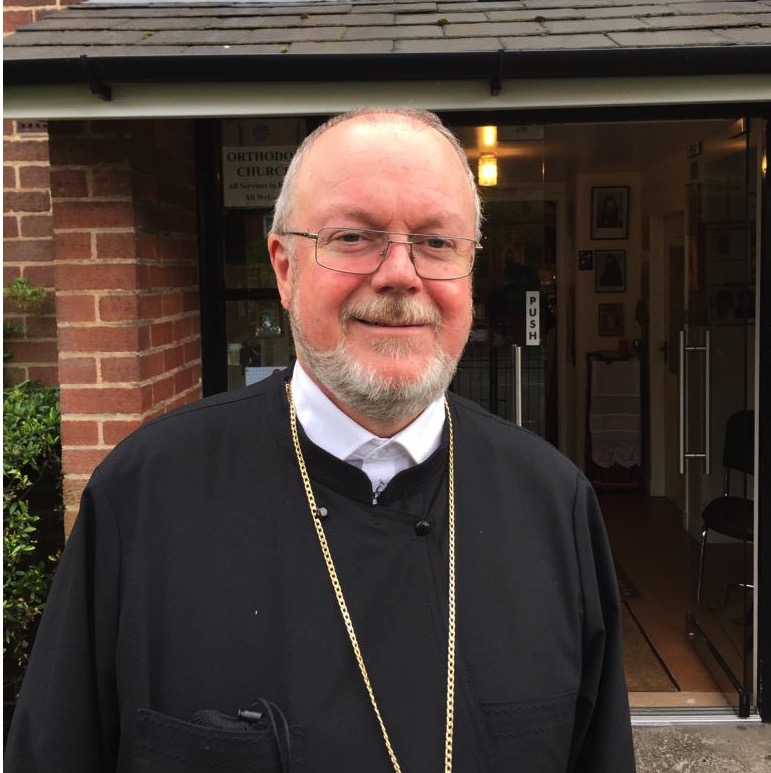 Archpriest Gregory Hallam
 Fr. Emmanuel Kahn