
Christ is risen! He is risen indeed! Today, with a group of first-century disciples, we celebrate the presence of Christ in our hearts. In the gospel of St John, beginning with chapter 20, verse 19, after His crucifixion, Christ joined the disciples “on the evening of . . . the first day of the week, [even though] the doors [were] shut.” Remember the disciples were quite confused at this time—not at all sure that the Resurrection of Christ had taken place. Mary Magdalene had been to the tomb and told the disciples, “I have seen the Lord.” However, as St John Chrysostom preached, and I quote: “It was likely that when the disciples heard these things from Mary they would either not believe the woman—or if they did believe her, they would be sad that [Christ] had not considered them worthy of such a vision even though He promised to meet them in Galilee” [end of quote].
I know that in my life in the past I have at times been in that room with a closed door, unsure of whether Christ has truly been resurrected. Certainly, that was true until I became a Christian at the age of 23, 55 years ago. Yes, I know He was crucified. Yes, I know that Jesus Christ was a real person who lived on earth at the beginning of the first century, some 2,000 year ago. But was He resurrected? Did his body ascend to heaven? How can I know; and if I am to be told surely Christ would tell me Himself with a vision, just for me, wouldn’t He?
No, no! Christ was resurrected for all of us, not just for me, or for you, or for any particular country or place or time. One modern Biblical commentator suggests, “perhaps Jesus appeared first to Mary [Magdalene] because she needed Him most at that time.” Perhaps! But then recognise that we each need to know that the body of Christ lying in that tomb in Jerusalem—and that tomb in our hearts, in the midst of our own personal (and private) problems which we fear cannot be solved—has been resurrected. What is the Resurrected Christ teaching us?
First, simply that He has been resurrected, so that if we wish to live as Christians who truly believe in Christ as the second person of The Holy Trinity, we need to embrace the Resurrection of Christ—we need to believe that the miracle of the Resurrection of Christ did happen. The remarkable Orthodox Christian leader, St Gregory the Great, who lived from 540 to 604, has linked the Resurrection of Christ to the Virgin Birth of Christ. St Gregory preached: “The Lord’s body that made its entrance to the disciples through closed doors was the same as that [body] which issued before the eyes of the people from the Virgin [Mary]’s closed womb at His birth. Is it surprising,” continued St Gregory, “if He who was now going to live forever made his entrance through closed doors after His Resurrection, who on His coming in order to die made His appearance from the unopened womb of a virgin? But because the faith of those who beheld it wavered [in confusion] concerning the body they could see, [Christ] showed them at once [the wounds in] His hands and His side, offering them the body that He brought in through the closed doors to touch. By this action He revealed . . . that His body after His Resurrection was of the same nature as ours but of a different sort of glory” [end of quote].
When Christ appeared through those closed doors three days after His crucifixion and let His disciples touch His body, Christ was saying simply: “Look! Touch me! I have been resurrected!” Many years ago, when I was an undergraduate at Dartmouth College in New Hampshire in the United States, my roommate was baptised and became a Christian. I, as a Jew, was impressed. I already knew that Jesus was a good person, even if I did not understand the full meaning of His life. Many years later I saw my friend again and told him that I too had become a Christian. Immediately, he asked me, “Do you believe in the Resurrection?” “Yes, certainly,” I replied. He looked at me and said, “I couldn’t get that far.” I was too stunned to reply. If we believe in the person of Jesus Christ, the person who was born of Holy Mary, the Theotokos, the person who lived and served and inspired so many during his 30 years on earth, the person who was crucified in Jerusalem, then that belief must include a belief in the whole of Christ’s life on earth which ended with the Resurrection and His Ascension into heaven.
OK. So when Christ appeared to the disciples even though all the doors into the room were closed, the person, Jesus Christ, was saying to His disciples and to us, “Look, touch Me! My body has been resurrected.” What words did Christ then immediately say? “Peace be with you.” St Cyril of Alexandria, the fifth century Patriarch of Alexandria has written: “When Christ greeted His holy disciples with the words, “peace be with you,” by peace He meant [the Presence of] Himself, for Christ’s presence always brings tranquillity of soul. This is the grace Paul desired for believers when he wrote [in Philippians, chapter 4, verse 7], “The peace of Christ which passes all understanding is in fact the Spirit of Christ, who fills those who share in Him with every blessing” [end of quote]. This peace “which passes all understanding” is not an emotional experience that life is “sort-of” under control, that emotionally we’re OK. NO! This peace is a personal awareness that the Presence of Christ accompanies us throughout our lives.
Many people today seek peace in an emotional sense, but not the fullness of the peace of Christ. Consider the words of the song, “We shall overcome” copyright by the folk singer, Pete Seeger, in 1960, just as I was graduating from Dartmouth and came to England. The words that Seeger sang so beautifully were: “We shall overcome. We shall overcome. We shall overcome someday. Deep in my heart, I do believe, we shall overcome someday.” However, as the British newspaper The Independent pointed out a few days ago “authentic folk songs by their nature are living, breathing evolving things.” [27 April]. It was the African-American gospel singer and composer Louise Shropshire who between 1932 and 1942 wrote the hymn, “If My Jesus Wills,” which began: “I’ll overcome, I’ll overcome, I’ll overcome someday. If my Jesus wills, I do believe, I’ll overcome someday.” Now, I agree that the changes Seeger made, especially the change from “I” to “we” make for a beautiful song, but notice that the meaning has been completely changed. Jesus Christ is no longer mentioned! Yet we do not overcome any adversity—any problem in our lives, any sickness—simply because we believe we can. It might be helpful to have confidence in our ability to face problems, but we truly overcome a problem only when we pray and know the will of Christ and seek to fulfil that will in our lives. On this glorious day of Pascha let us celebrate the Resurrection of Christ in His Life and its impact on each of our lives.
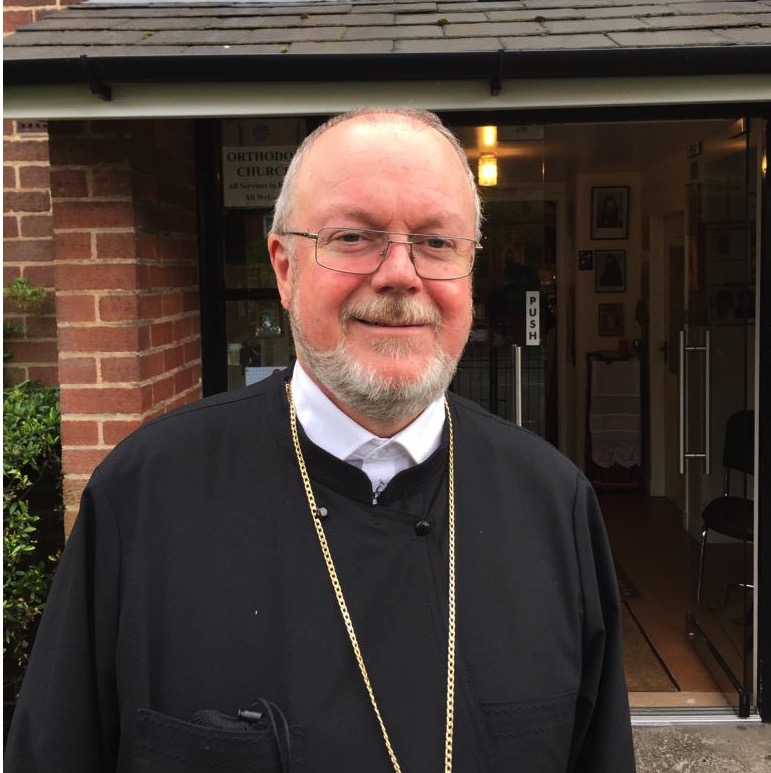 Archpriest Gregory Hallam
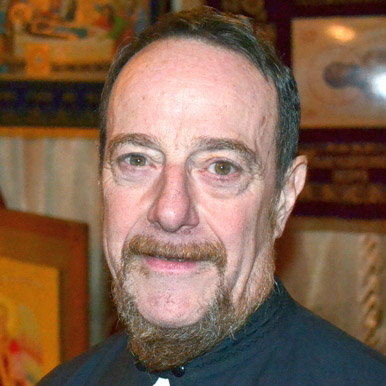 Fr. Emmanuel Kahn