
In the name of the Father and of the Son and of the Holy Spirit. God is one. Amen.
Today is the Patronal Feast of the saint for whom our church has been named, St Aidan of Lindisfarne. We shall have our Patronal Festival Party on Sunday, and in preparation for that celebration I should like to consider today how does a person become a saint and how did St Aidan become a saint? I shall draw upon the insights of Archimandrite Vasileios, Abbot of Iviron Monastery on Mount Athos, published as The Saint: Archetype of Orthodoxy. An archetype is an original model from which later forms are copied. That is precisely what we are seeking to understand this morning: who is the original model of sainthood?
In Greek, the same word agios means both holy and saint. Certainly, every saint is a holy person. However, as Father Vasileios comments none of us feel that we are now or will become saints in the sense of living completely holy lives. In the Divine Liturgy just before Holy Communion, the priest proclaims: “One is holy, one is Lord, Jesus Christ, to the glory of God the Father. Amen.”
Because Jesus Christ is both the model and source of holiness in the Holy Spirit for our lives, that means for St Aidan, for us or for any Orthodox person to become a saint we need to draw closer to Christ. It does not matter whether the Church ever recognises us as saints. What matters is that we ourselves see within ourselves, somewhat to our surprise perhaps, that we can become saints, and that we can follow Him.
Now, being Orthodox is not a hobby, a pleasant and exotic distraction from the challenges of life. Being Orthodox is the central challenge that we confront in our lives. Whether each of us is a lay person, a monk, a deacon, a priest or a bishop, we each confront the same challenge: become a fully Orthodox person and live as a follower of Jesus Christ and His Church. The dictionary defines “exotic” as “introduced from a foreign country.” Perhaps to some people only recently received into the Church, or to others still enquirers or catechumens, Orthodoxy is still a relatively foreign country. Even for those of us who have been Orthodox for some time, we do not always know this country of Orthodoxy as well as we should like to know it.
Father John Anthony McGuckin, writing in The Orthodox Church: An Introduction to Its History, Doctrine and Spiritual Culture, jokes that:
The Orthodox (generally) do not regard themselves as exotic. If they have come to Orthodoxy from other forms of Western Christian tradition, or from secular atheism [and one might add—or from a traditional Orthodox family that did not live the fullness of Orthodoxy], they often are tempted to regard themselves as exotic for a while, but it soon wears off.
That’s good to know, isn’t it—the idea that we are strange and exotic wears off as we live the fullness of Orthodox life with its personal prayer and liturgy in the community and commitment to social and economic justice. However, continues Father John, “many external observers do still retain that perspective [that people seeking to be fully Orthodox are strange and exotic], and it can often tempt [those seeking to be fully Orthodox] to live up to it by ‘posing’ as exotic: a dangerous state of affairs.”
What we need, suggests Father John, is “an Orthodox articulation,” that is, a clear and concise expression in words, of what both the Church and society should be. Father John proposes in all seriousness, and I quote:
Orthodoxy is often approached by those outside it as a system of doctrines. But it is far more than this… Orthodoxy is the living mystery of Christ’s presence in the world: a resurrectional power of life. It cannot be understood except by being fully lived out; just as Christ Himself cannot be pinned down, analysed, digested or dismissed by the clever of the world…. [The] message [of Christ] is alive in the world today as much as when He first preached it. The Orthodox Church is, essentially, His community of disciples trying to grow into His image and likeness, by [growing closer and closer] to the Master who abides among [us].
In the seventh century, St Aidan certainly understood that the group of monks in Iona in the north of Scotland, of which he was a member, were indeed a “community of disciples [of Christ] trying to grow into His image and likeness.” He had no special plans, no desire to be a bishop. He simply prayed that he would live within the will of God. What happened was that, to his surprise, he was ordained a bishop and sent from northwest Scotland to northeast England—to the island of Lindisfarne. Today we might think—that’s no big deal to move from Scotland to England—different cultures, different challenges—but no big deal. However, in the seventh century, the whole of Britain was on the edge of the Roman world—a dangerous and unknown place filled with pagans who did not believe in Christ.
Father Lawrence Farley, pastor of St Herman of Alaska Orthodox Church in Canada, has written:
Aidan lived in the early days of the Church’s missionary expansion into Britain, when pagan kings still fought to exterminate Christianity … [He] lived a life rooted in the Scriptures, and he encouraged those travelling with him to spend their time reading the Scriptures and committing the Psalter to memory. He found his delight in God and … would often spend time in solitude, reading the Scriptures and praying. God prospered Aidan, and he had great success, making converts to Christ and establishing monastic centres throughout northern England.
As the historian Bede wrote of St Aidan,
He cultivated peace and love, purity and humility. He took pains never to neglect anything that he had learned from the writing of the evangelists, apostles, and prophets, and set himself to carry them out with all his powers. I greatly admire and love all these things about Aidan, because I have no doubt that they are pleasing to God.
Now, if we wish to be pleasing to God then we too need to pray with Christ, “Not my will, but yours be done,” as Christ prayed in the garden in Gethsemane, before the Crucifixion, as set out by St Luke in chapter 22, verse 42 of his Gospel: We cannot will ourselves either into heaven or into happiness, but we can seek the will of God in our lives, even if we do not yet know precisely what that will is. If we can be calm enough to give the Lord the opportunity to guide our lives, He will do so, just as He guided St Aidan.
Indeed, if we wish to participate fully in what Father John has beautifully described as “the living mystery of Christ’s presence in the world,” then St Aidan is a good model for us. We do not need to become bishops. We do not need to commit all the Psalms to memory, although it is good to remember a few psalms throughout the day. What we do need to do is to pray, to prepare ourselves for and to come regularly to Holy Communion, and to do what the French call “faire attention”—that is, “to do attention,” to be alert to our own changing needs and hopes, and to the changing needs and hopes of our families and friends. Let us do this. Let us pray. Let us prepare ourselves and come regularly to Holy Communion. Let us “faire attention”—that is, pay attention to when and how our needs and hopes change, as well as how the needs and hopes of those around us change, just as St Aidan did in Iona in the seventh century. Then I have no doubt that what St Bede wrote of St Aidan will also be true of us. We will each become pleasing to God.
And so, we ascribe as is justly due all might, majesty, dominion, power and praise to God, Father, Son and Holy Spirit, always now and ever and unto the ages of ages. Amen.
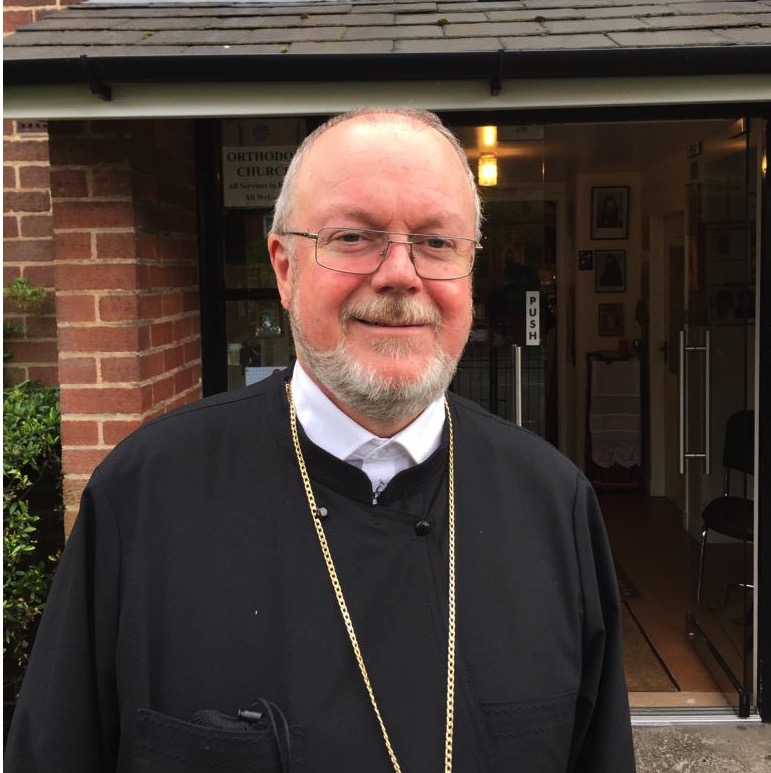 Archpriest Gregory Hallam
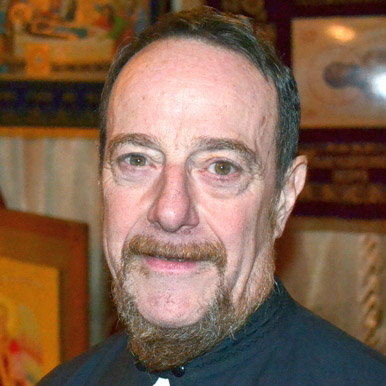 Fr. Emmanuel Kahn