
Today, as we extend the Patronal Feast for the patron saint of our parish, St Aidan of Lindisfarne, we celebrate both his life and the life of Moses the prophet. Last Wednesday, on the feast of St Aidan, we celebrated a Divine Liturgy at which Father Gregory preached about how St Aidan drew no less than two local Northumbrian kings, St Oswald and St Oswy, into a partnership of mission,—a model for how we as Christians should draw our government and Members of Parliament to believe in Christ and witness to Him. That excellent sermon is available on the Ancient Faith website, so today let us now consider the early life of Moses and its significance for us.
Why, you might ask, does the Orthodox Church call Moses a prophet and set aside a day in the Church calendar to remember him? In the book, The Old Testament in Eastern Orthodox Tradition, an Orthodox theologian, Father Eugen Pentiuc of the Greek Orthodox School of Theology in Brookline, Massachusetts, USA explains that: “From the very beginning, the Jewish Bible, the Old Testament, was the only Bible of the early Christians and its authority was entirely [believed], with special emphasis on [the] prophetic dimension of the Old Testament pointing to Christ, [the Holy] Spirit, and [the importance of] community.”
Moses had a tough life, facing many challenges. As Exodus chapter 2 and the Book of Acts chapter 7 tell us, Moses was born in Egypt, son of Hebrew slaves, at a time when all male babies had been ordered by Pharaoh to be killed. The firm tradition is that the three-month-old baby Moses was placed by his mother Jochebed in a wicker basket and then floated down the Nile River, as Miriam, the older sister of Moses watched. He was then found and adopted by Pharaoh’s daughter, who named him, Moses, from an Egyptian word meaning “is born.”
Considering the birth of Moses, The Orthodox Study Bible has noted that it is “the Lord [who] sets incarnational history in motion in the midst of great opposition.” In other words, the Incarnation—the process of God becoming human in the person of Jesus Christ—is foretold, that is, anticipated—by the life of Moses, because Moses, like Jesus Christ, is to save his people. Moses faces quite a challenge—to save his fellow Hebrews from slavery under Pharaoh. Now, being brought up in the palace of Pharaoh by Pharaoh’s daughter would appear to be what we would call today, “a cushy life”—comfortable, easy and undemanding. However, Moses continued to stay in touch with his parents and his sister Miriam and his brother Aaron, remembering his Hebraic roots and faith.
Then, as the second chapter of the book of Exodus tells us, when Moses had grown up, “he went out to his [Hebrew] brethren and looked on their hard labours; and he saw an Egyptian beating a Hebrew.” In anger, Moses killed and buried the Egyptian. “When Pharaoh heard of this matter, he tried to kill Moses.” However, Moses escaped by fleeing into the desert of Midian. Several events in the desert were especially important for Moses. First, he helped the daughters of Ruel to water their flock from a well and later married Zipporah, one of the daughters of Ruel. Moses and Zipporah had a son whom Moses named Gershom which means “a stranger there” because Moses knew that he was, as the book of Exodus phrases it, “a sojourner in a foreign land.” A sojourner is someone who has a short stay somewhere. When the daughters of Ruel met Moses at the well, they told their father that they had met “an Egyptian.” However, Moses knew that he was a Hebrew and that he had run away from Egypt to escape certain death. Moses did not know how long he would be in the desert, but he knew it was not his home, and that he was far from his people.
The Bible tells us that Moses lived as a shepherd in the desert of Midian for 40 years. In the Bible, the number 40 is often a symbol for a period of testing and trial, as when Moses twice climbed and remained for 40 days on Mount Sinai to receive the 10 Commandments, and as later when Jesus Christ was tested in the desert for 40 days before He began His public ministry. Whatever the precise time period that Moses or Jesus Christ was actually in the desert, this was clearly an important time in their lives—in their preparation for future ministry. All of us experience times of testing and trial when we too are being prepared for the future work that God plans for each of us. What is important is not the level of leadership for which we are being prepared, but that the Lord is protecting us, looking after us, guiding our lives even when we are not aware of the precise nature of His guidance.
The moment when the Lord called Moses was quite unexpected, just as our own calling from the Lord could well be unexpected. We might feel that we are too young or too old to be called by the Lord—too fixed in our present lives and limitations to be offered a new challenge by the Lord. Although Moses knew he was a Hebrew living in a foreign land, he was happily married, peacefully working as a shepherd and not looking for major changes in his life. Yet he continued to search for meaning in life; and he was curious. Therefore, when Moses saw “an angel of the Lord … in a flame of fire” and a bush “burning with fire, yet … not consumed,” he decided “to turn aside now and see this marvellous sight, why the bush is not burned up. [It was only] when the Lord saw that [Moses had] turned aside to look, God called to him from the midst of the bush and said, ‘Moses, Moses!’ And [Moses] replied, ‘Here am I.’”
Many early Church Fathers, including Origen, Ambrose and Jerome, have pointed out that when Moses turned aside to see the bush he was “passing by [the] things of this world.” As St Gregory the Great wrote: “Unless [Moses] had withdrawn the footsteps of his heart from love of the world, he would never have been able to understand heavenly things.” So it is for each of us. To be “able to understand heavenly things” we have to withdraw “from love of the world” and to say to the Lord, ‘Here am I.’ We each stand before the Lord today without knowing precisely how tomorrow we might serve Him and His people and others.
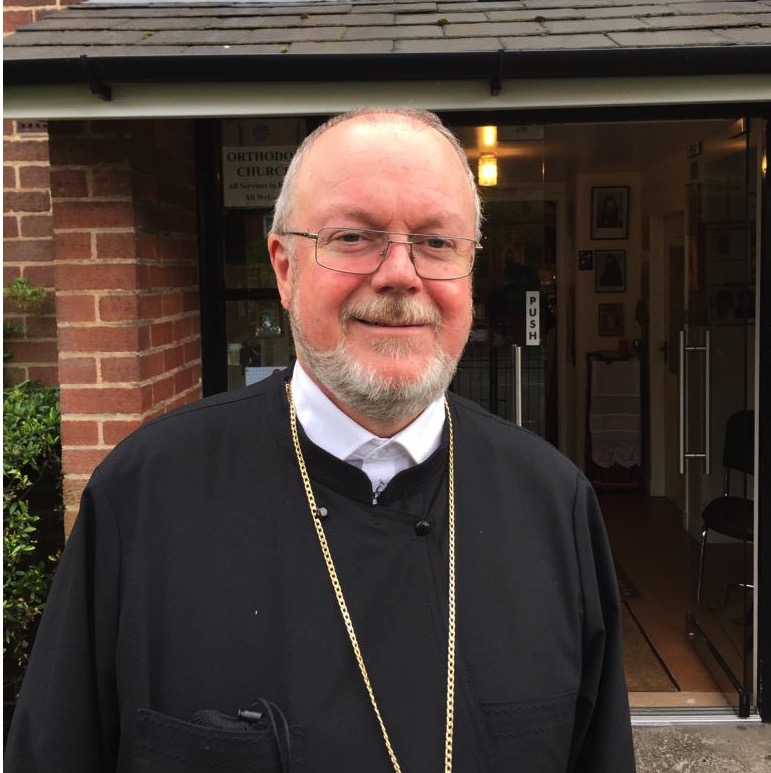 Archpriest Gregory Hallam
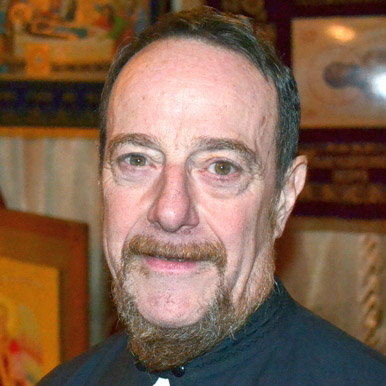 Fr. Emmanuel Kahn