
The Fire This Time
In the name of the Father and of the Son and of the Holy Spirit. God is one. Amen
The Church has chosen as the epistle reading for today Romans, chapter 2, verses 10 to 16 that begins, and I quote: “Glory and honour and peace for everyone who does good, for the Jew first and also the Greek. For there is no partiality with God.” In other words, God does not favour one person or group of persons unfairly. In first-century Palestine before the birth of Jesus Christ, the main groups of people were Romans and Jews, as well as Samaritans and new arrivals. Today, throughout the world, there are many different groups of people, but God still supports and judges us all equally.
That is very important, especially at this time when so many people, in so many countries, are making judgments about other people based on their race. In 1963 the black American, James Baldwin, wrote: “I underwent, during the summer that I became 14, a profound religious experience. I use the word ‘religious,’” he wrote, “in the common, and arbitrary sense, meaning I then discovered God, His saints and angels and His blazing hell… [Until then] I supposed [God] to exist only within the walls of a church—in fact our church—and I also supposed that God and safety were synonymous [that is, the same],” concluded Baldwin.
That is a remarkable reflection. At the same time that James Baldwin gained a deep personal awareness of God in his own life, he also became aware that God existed outside the walls of his church, and that God did not always bring him and others safety. Appropriately, Dominic Erdozain of Kings College, London, wrote a “story of Christian survival in Soviet [Russia];” and he titled his book, The Dangerous God: Christianity and the Soviet Experiment. James Baldwin titled his book, The Fire Next Time. And now, as we see in the news all around us, and as Jesmyn Ward has written in her book, we are experiencing The Fire This Time.
Baldwin was not an Orthodox Christian. We would not focus as much as he did on “blazing Hell.” However, we are still confronted with God’s judgment on our actions. The epistle reading today begins mid-sentence, because the previous verse states “There will be affliction and distress on everyone who does evil, on the Jew first and also the Greek.” So “the glory and honour and peace for everyone who does good” which began the epistle today is a result of choices that we make, not a promise from God that He will always protect us.
Now is a time when we make those choices. A neighbour said to me last week, “I don’t approve of all these protests. Young people have to prove themselves first,” he insisted. Now, he seemed to be expressing his distrust of British people who are of Afro-Caribbean origin, rather than young people in general. But how can anyone, whatever their colour, “prove themselves” if they cannot find a job or a place in our society? Even if they are hesitantly offered a place, they often find there are no welcoming role models to encourage them and little prospect of promotion. It is not surprising that “the fire this time” is upon us, because “white rage” and determination to maintain white privileges has increased “black rage” and a determination to remove inequities.
As Orthodox Christians today, we are confronted with two choices. First, do we believe that Orthodox Christianity is simply a religion confined to church or do we live not only in church buildings but in families and communities where God is present in our own lives and the lives of others? The epistle today makes it clear that it is a false hope—a dangerous delusion—to believe that God will always protect us no matter how we behave. Second, once we understand that God does not live only in church buildings, we face a further choice. Do we really seek for ourselves and others the peace set out in Philippians, chapter 4, verse 17—“the peace of God that surpasses all understanding and [will] guard [our] hearts and minds in Christ Jesus”? That question is easy to pose, but each of our answers will be personal and perhaps at times private, until we have gained the courage to act on our new beliefs.
There are at least three major challenges now throughout our temporal world—a dangerous virus that continues to spread and has infected more than 7½ million people and killed more than 420,000 people, a deepening economic crisis causing increased poverty, and increased white rage and black rage. We are certainly being tested in fire; and whatever the causes of these many fires we each face a question: How are we to respond to these fires?
The Gospel for today from St Matthew, chapter 4, verses 18 to 23 offers us an answer. Jesus walked by the Sea of Galilee and said to four fishermen, “Follow Me.” We too need to wait to be called by God to specific tasks and to then follow where God guides us. You might ask, “How will I know God is calling me?” You will know. You will know, because there is peace in your heart and courage in your mind when you see what needs to be done now and how you can follow the Lord. But we do need to be patient with ourselves and with the Lord, as we seek these new paths.
And so, we ascribe as is justly due all might, majesty, dominion, power and praise to God, Father, Son and Holy Spirit, always now and ever and unto the ages of ages.
Father Emmanuel Kahn
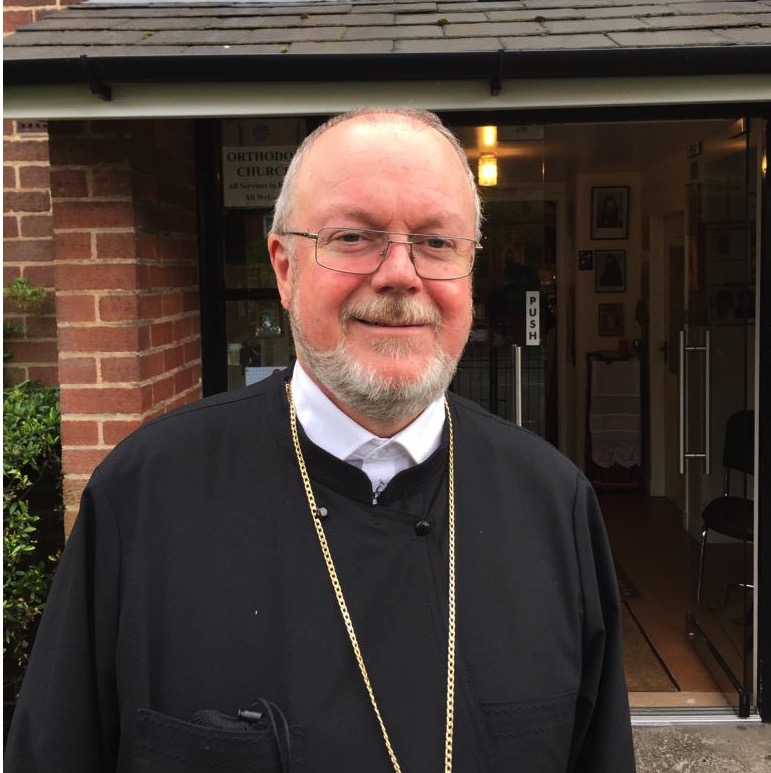 Archpriest Gregory Hallam
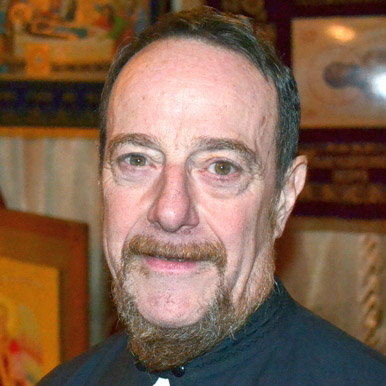 Fr. Emmanuel Kahn