
The Gospel today from the 11th chapter of the Gospel of St John is about a close friend of Jesus Christ, Lazarus. You will just have heard how Lazarus had become seriously ill. The sisters of Lazarus, Martha and Mary, sent a message to Jesus, informing him of the illness and asking Jesus to come immediately to Bethany, two miles from Jerusalem, where they lived. However, at that time, Jesus and His disciples were a day’s journey away from Jerusalem. Jesus then waited another two days before starting to walk on the road to Bethany to see Lazarus. Everyone, including Jesus, knew that Lazarus was dead.
The decision that Jesus Christ made to set out on the journey to Bethany was one of the most important decisions of His life on earth. It was important because He waited several days before starting to travel; and it was important because on his last visit to that area the Judeans had tried to stone Him. The disciples were puzzled, both because of the waiting and because of the risks of returning to Judea. Therefore, Jesus explained to the disciples that He knew that Lazarus had died, but He had waited “so that you may have faith.” They did not understand the waiting, but they knew that any visit to Judea would be very dangerous. As the apostle Thomas said to the other disciples, “Let us also go, so that we may die with Him.”
The decision to go to Bethany was a matter of life and death and faith. What would happen was not clear to the disciples, but it was a matter of the life and death of Lazarus, the life and death of Jesus Christ, and strengthening the faith of the disciples. Jesus alone knew exactly what He was doing—that He would raise Lazarus from the dead, that many Judeans would believe in Him because of this miracle, and that the Chief Priest and the Jews of their Council would hand Jesus over to the Romans to be killed.
Because of the determination of the Pharisees to kill Jesus, St John tells us in the closing verses of chapter 11 of his Gospel that “Jesus no longer openly walked abut among the Judeans, but departed from there to a region near the wilderness, to a city called Ephraim, and remained there with His disciples.” In other words, after the raising of Lazarus from death to life Jesus Christ went into hiding, so that it would be He alone who decided when He would voluntarily give up His life.
Today it is good if we ask ourselves: What does the life and death and return to life of Lazarus mean for us now and in the future? It was some 2,000 years ago in a very different culture and country than our own. Yet, we can begin to see that every ending in our lives today can be a new beginning in the Lord. Often, we too, like Lazarus, must wait in the midst of considerable suffering, until the time is appropriate for God to intervene in our lives. Why does God sometimes wait and not answer our prayers immediately?
Martha too puzzles over why Jesus waited to come to Bethany, when she was certainly praying he would come to heal her sick brother as soon as possible. After the death of Lazarus, Martha, in the midst of grief, says to Jesus Christ, “Lord, if you had been here, my brother would not have died. And even now I know that whatever you ask from God, God will give you.” St Augustine preached: “[Martha] does not say to [Jesus], ‘Bring my brother to life again.’ For how could she know that it would be good for him to come to life again? [Martha] says, I know that you can do so, if you want to, but what you will do is for your judgment, not for my presumption to determine” [Tractates on the Gospel of John.49.13]. In other words, in the midst of her faith in Jesus Christ, Martha does not question Him.
Jesus tells Martha, “Your brother will rise again;” and then Jesus explains to Martha that, “I am the resurrection and the life; he who believes in Me, though he die, yet shall he live, and whoever lives and believes in Me shall never die.” St John Chrysostom explains that Jesus Christ “leads [Martha] to the knowledge of higher truths. Even though she had been inquiring only about the resurrection of Lazarus, He tells her of a resurrection in which both she and those with her would share” [Homilies on the gospel of John 62.3].
So it is for each of us. We do not always receive what we ask of the Lord, because He knows our needs and our lives better than we do. He knows how each person living in the world now fits into His plan for eternal life. It is good that we should pray for our own needs and hopes. Yet we, like Martha and Mary and Lazarus, must also trust that we too will continue to believe and experience that Jesus Christ Himself is “the resurrection and the life.”
I close with the words of Christ, as expressed by St Athanasius in his Homily on the Resurrection of Lazarus: “I am the voice of life that wakens the dead. I am the good odour [of life] that takes away the foul odour [of death]. I am the voice of joy that takes away sorrow and grief. . . . I am the comfort [for] those who are who are in grief. Those who belong to Me are given joy by Me. I am the joy of the whole world. I gladden all My friends and rejoice with them. I am the bread of life.”
Let us love one another, that with one mind we may confess Father, Son and Holy Spirit, the Trinity, One in essence and undivided. Amen.
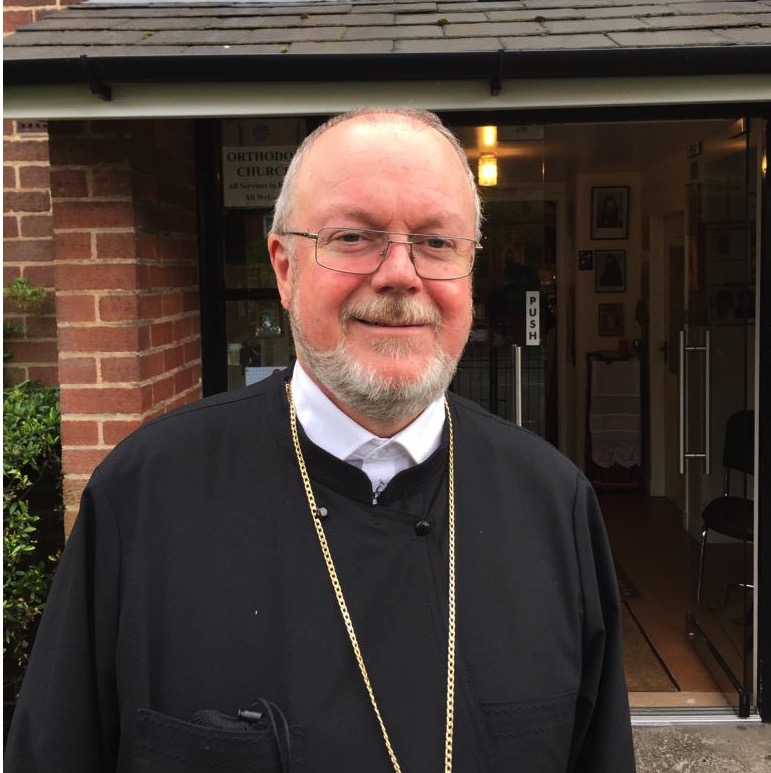 Archpriest Gregory Hallam
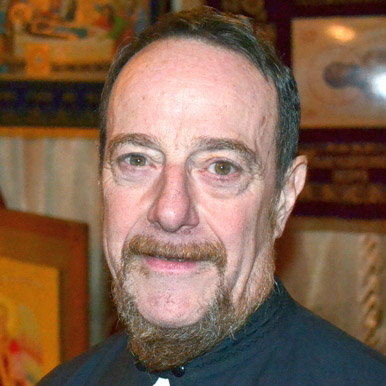 Fr. Emmanuel Kahn